
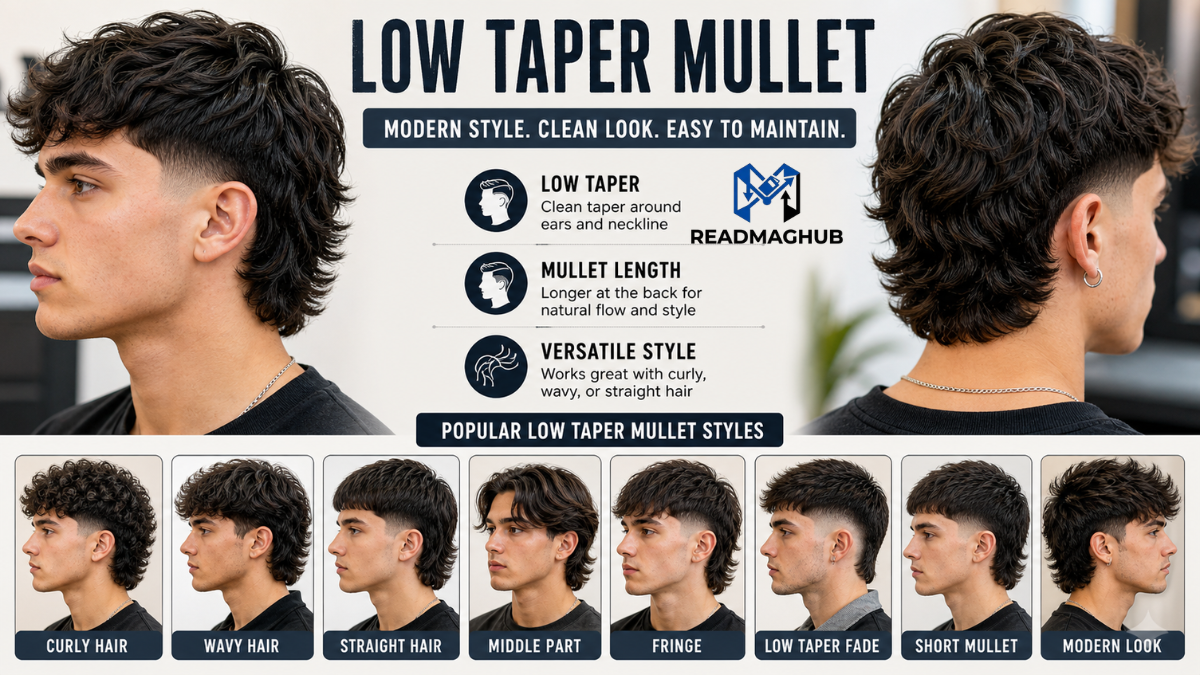

You’ve probably seen it everywhere—on social media, in barbershops, even on people who never experimented with bold hairstyles before. The Low Taper Mullet is making a serious comeback, but not in the way you might remember from the past. Today’s version is cleaner, more versatile, and surprisingly wearable for everyday life.
The problem most people face is figuring out how to pull it off without looking outdated or overly edgy. Should you go for a fade? Does it work with curly or straight hair? And how do you maintain it without constant barber visits?
This guide breaks it all down in a practical, real-world way. Whether you’re considering a low taper mullet haircut for the first time or trying to refine your current style, you’ll learn exactly what works, what doesn’t, and how to make it suit your face shape, hair type, and lifestyle.
What Is a Low Taper Mullet?
A Low-Taper Mullet blends two key elements:
- Low taper fade on the sides and neckline
- Longer length at the back (mullet style)
Unlike traditional mullets, this version keeps things subtle and modern. The taper starts low around the ears and neckline, giving a clean, professional finish while still keeping that signature length at the back.
Why it’s trending:
- Works in both casual and semi-formal settings
- Looks stylish without being extreme
- Adapts well to different hair textures
Who Should Try a Low Taper Mullet?
The truth is, this cut is more flexible than most people think.
Best for:
- Men who want a stylish but not loud haircut
- People transitioning from fades to longer styles
- Anyone wanting texture and movement without losing shape
Face shape compatibility:
- Oval: Works perfectly
- Round: Adds length and structure
- Square: Softens sharp angles
Types of Low Taper Mullet Styles
1. Modern Low Taper Mullet
The modern low-taper mullet is all about balance. It avoids extreme contrast and blends smoothly from front to back.
Best for: First-timers
Look: Clean, controlled, and fashionable
2. Low Taper Mullet Fade
The low-taper mullet fade adds more definition to the sides.
- Sharper transitions
- Cleaner edges
- More contrast between top and sides
Pro tip: Ask your barber for a “skin or low fade with soft blending” to avoid harsh lines.
3. Low Taper Mullet Curly Hair
A curly low-taper mullet adds natural volume and personality.
- Curls enhance the back length
- Taper keeps sides neat
- Less styling effort needed
Unique insight: Curly hair actually makes the mullet look more intentional and less retro—because the texture breaks up the classic silhouette.
4. Low Taper Mullet Straight Hair
The low-taper mullet for straight hair gives a sleek and structured appearance.
- More defined shape
- Easier to control
- Works well with fringe or middle part
Tip: Use a light styling cream to avoid flatness.
5. Low Taper Mullet Wavy Hair
The low-taper mullet with wavy hair sits perfectly between curly and straight.
- Natural movement
- Effortless styling
- Looks fuller without bulk
6. Low Taper Mullet Middle Part
The middle part low-taper mullet adds a trendy, Gen-Z touch.
- Frames the face
- Works best with medium-length top
- Ideal for straight or wavy textures
7. Low Taper Mullet Fringe
Adding a fringe changes the entire vibe.
- Softer front
- More youthful look
- Balances longer back
8. Short Low Taper Mullet
Not ready for a dramatic change? Try a short low-taper mullet.
- Minimal length at the back
- Easier to maintain
- Great for professional settings
How to Ask Your Barber (Without Confusion)
One of the biggest mistakes is not explaining the cut clearly.
What to say:
- “Low taper on the sides and neckline”
- “Keep length at the back but not too long”
- “Blend the top naturally”
Bring clarity:
- Mention your hair type (curly, straight, wavy)
- Specify how bold or subtle you want it
Unique insight: Many bad mullets happen because the back is left disconnected. Always ask for a blended transition, not a harsh drop.
Styling Tips That Actually Work
Daily styling routine:
- Use light pomade or cream for control
- Blow-dry the front for volume
- Let the back fall naturally
For curly hair:
- Apply curl cream while damp
- Avoid heavy products
For straight hair:
- Add texture spray
- Use fingers instead of combs for a natural look
Maintenance: Keep It Fresh Without Overdoing It
A mens low-taper mullet doesn’t require constant upkeep, but it still needs attention.
Ideal schedule:
- Taper touch-up: every 2–3 weeks
- Full haircut: every 4–6 weeks
At-home care:
- Trim neckline lightly if needed
- Keep hair hydrated
- Avoid over-styling
Common Mistakes to Avoid
- Going too long at the back too quickly
Start short and grow into it - Ignoring your hair type
A low-taper mullet curly hair style won’t behave like straight hair - Over-fading the sides
Too high of a fade ruins the “low taper” effect - Skipping styling products
Even minimal styling makes a big difference
Real-Life Use Cases
Office-friendly version:
A short low taper mullet with subtle length keeps things professional while still stylish.
Casual everyday look:
A low taper mullet wavy hair style works effortlessly with minimal styling.
Bold statement:
A curly hair low taper mullet with defined volume stands out without trying too hard.
Advanced Insight: What Most People Miss
- Balance is everything: The success of a low taper mullet men style depends more on proportion than length. Too much contrast ruins the look.
- Neckline detail matters: A clean taper at the neckline makes the style look intentional rather than messy.
- Hair growth direction changes the result: If your hair grows outward at the back, your mullet will look fuller without extra length—use that to your advantage.
FAQs
Is a low taper mullet suitable for straight hair?
Yes, the low taper mullet for straight hair works very well. It creates a clean, structured look and is easy to style with lightweight products. Adding texture can prevent it from looking flat.
How do I style a low taper mullet curly hair look?
Use a curl-enhancing cream on damp hair and let it air dry. The low taper mullet curly style benefits from natural volume, so avoid heavy gels that weigh curls down.
What’s the difference between a low taper mullet fade and a regular mullet?
A low taper mullet fade includes gradual fading on the sides and neckline, giving it a cleaner and more modern appearance compared to the traditional, disconnected mullet.
Can I get a low taper mullet with short hair?
Yes, a low taper mullet short hair version is perfect for beginners. It keeps the back subtle while still maintaining the mullet shape.
Does a middle part work with a low taper mullet?
Absolutely. The low taper mullet middle part adds symmetry and frames the face well, especially for straight or wavy hair types.
Conclusion
The Low Taper Mullet isn’t just a trend—it’s a flexible, modern hairstyle that adapts to your personality, hair type, and lifestyle. Whether you go for a bold version or keep it subtle, the key is balance, clean tapering, and understanding your hair.
Start simple, communicate clearly with your barber, and refine the style over time. Once you get it right, it’s one of the easiest hairstyles to maintain while still standing out.