
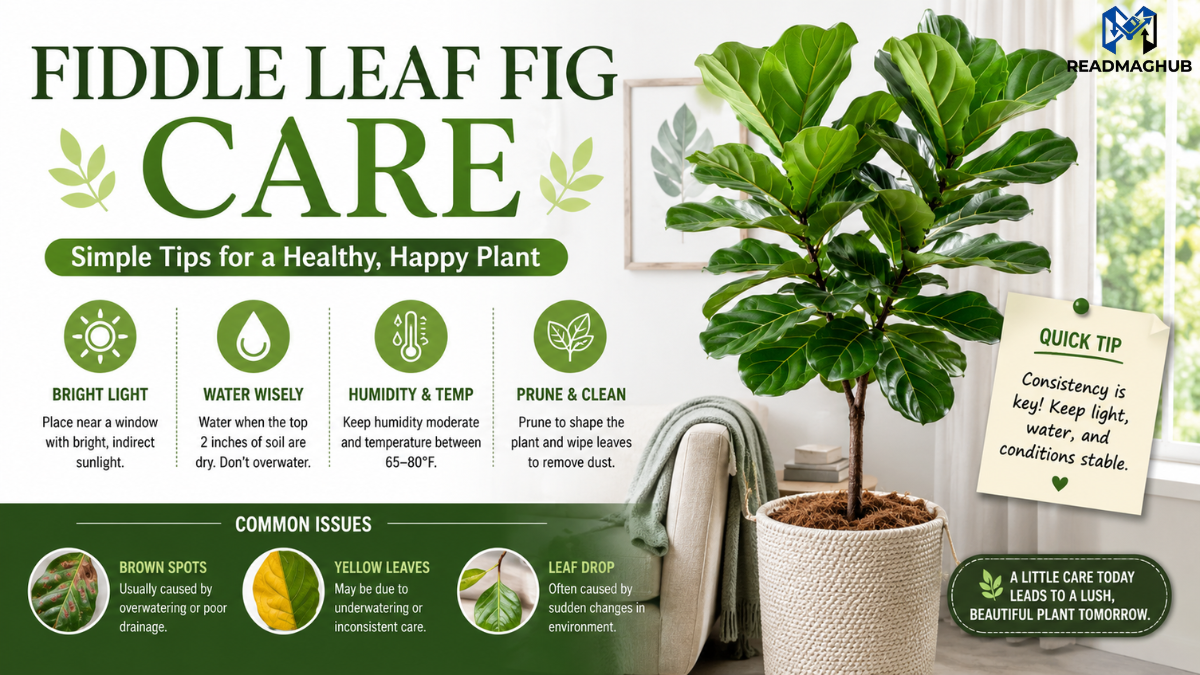

If you’ve ever brought home a fiddle leaf fig only to watch its leaves turn brown, droop, or suddenly fall off, you’re not alone. Many plant owners struggle with fiddle leaf fig care because this popular indoor tree can be surprisingly sensitive to changes in light, watering, and humidity. One week it looks lush and healthy, and the next it seems to be protesting everything you do.
The good news is that fiddle leaf fig care becomes much easier once you understand how the plant naturally grows. Native to tropical regions, fiddle leaf figs thrive in stable environments with bright light, moderate moisture, and consistent routines. Most problems happen when conditions change too quickly or when well-meaning owners overwater them.
This fiddle leaf fig care guide will walk you through everything you need to know, from lighting and watering to pruning and fixing brown spots. Whether you need fiddle leaf fig care for beginners, indoor fiddle leaf fig care tips, or advice for a bambino fiddle leaf fig, you’ll learn practical strategies that actually work in real homes—not just in perfect greenhouse conditions.
What Makes Fiddle Leaf Figs Difficult?
One reason people search for fiddle leaf fig care difficulty is because these plants react dramatically to stress. Unlike hardier houseplants, they often show visible symptoms quickly.
Common reasons fiddle leaf figs struggle include:
- Inconsistent watering
- Low indoor humidity
- Sudden temperature changes
- Poor drainage
- Frequent moving around the house
- Not enough sunlight
A major mistake beginners make is treating them like low-light plants. In reality, fiddle leaf figs need far more brightness than most people expect.
Unique Insight: Stability Matters More Than Perfection
One overlooked truth about fiddle leaf fig care instructions is that consistency matters more than achieving “perfect” conditions. A plant receiving slightly imperfect but stable care often grows better than one constantly adjusted and moved around.
Fiddle Leaf Fig Care for Beginners
If you’re new to houseplants, start with these core rules.
1. Give It Bright Indirect Light
The best location is near a large east- or south-facing window with filtered sunlight.
Signs your plant needs more light:
- Leaning toward windows
- Small new leaves
- Slow growth
- Dropping lower leaves
Too much harsh direct afternoon sun can scorch leaves, especially if the plant wasn’t gradually acclimated.
2. Water Only When the Top Soil Dries
Fiddle leaf fig care watering is often where problems begin.
A simple routine:
- Check the top 2 inches of soil
- Water thoroughly only when dry
- Empty excess water from trays
Overwatering is far more dangerous than underwatering.
3. Use a Pot With Drainage
Without drainage holes, roots stay wet too long and rot develops quickly.
4. Avoid Frequent Relocation
Fiddle leaf figs dislike sudden environmental changes. Moving them repeatedly can trigger leaf drop.
Indoor Fiddle Leaf Fig Care Essentials
Because most people grow them indoors, fiddle leaf fig care indoor routines should focus on recreating tropical conditions.
Best Indoor Conditions
| Factor | Ideal Condition |
| Light | Bright indirect sunlight |
| Temperature | 65–80°F |
| Humidity | 40–60% |
| Watering | Moderate and consistent |
| Soil | Well-draining potting mix |
Humidity Matters More Than People Realize
Indoor heating and air conditioning dry the air significantly.
A unique but effective trick:
Place several plants together nearby. Grouped plants naturally increase surrounding humidity levels without needing constant misting.
Should You Mist a Fiddle Leaf Fig?
Occasional misting is fine, but it’s not enough to raise humidity meaningfully. A humidifier works much better.
Fiddle Leaf Fig Care Watering Guide
Watering routines should change with seasons, light exposure, and plant size.
How Often Should You Water?
Typical indoor schedule:
- Spring/Summer: Every 7–10 days
- Fall/Winter: Every 2–3 weeks
But always check the soil first.
Signs of Overwatering
- Brown spots in the center of leaves
- Mushy stems
- Yellowing leaves
- Fungal smell
Signs of Underwatering
- Crispy leaf edges
- Dry soil pulling from the pot
- Drooping leaves
Unique Insight: Water Temperature Matters
Cold tap water can shock sensitive roots. Room-temperature water is gentler and often reduces stress-related leaf spotting.
Fiddle Leaf Fig Care Brown Spots Explained
One of the most searched problems is fiddle leaf fig care brown spots because spotting can come from multiple causes.
Brown Spots Near the Center
Usually indicates overwatering or root rot.
Crispy Brown Edges
Typically caused by:
- Dry air
- Underwatering
- Salt buildup in soil
Pale Brown Patches
Often sunburn from direct harsh sunlight.
How to Fix Brown Spots
- Inspect soil moisture
- Improve drainage
- Adjust watering routine
- Increase airflow
- Remove severely damaged leaves
Do not panic and remove every damaged leaf immediately. Slightly damaged leaves still help the plant produce energy.
Fiddle Leaf Fig Care and Pruning
Pruning helps shape the plant and encourage branching.
Best Time to Prune
Spring and early summer are ideal because active growth helps recovery.
How to Prune Properly
- Use clean, sharp shears
- Cut just above a leaf node
- Never remove more than 20% at once
Why Pruning Encourages Branching
A little-known fact in fiddle leaf fig care pruning is that cutting the top growth redirects energy into dormant side nodes. This is how growers create fuller, tree-like shapes instead of tall single stems.
Fiddle Leaf Fig Care Outdoors
Fiddle leaf fig care outdoors can work surprisingly well in warm climates.
Outdoor Requirements
- Temperatures above 55°F
- Bright shade or filtered sunlight
- Protection from strong wind
- Gradual acclimation
Never move an indoor fiddle leaf fig directly into full outdoor sun. Leaves can burn within hours.
Bringing It Back Indoors
Before colder weather arrives:
- Inspect for pests
- Clean leaves
- Transition gradually indoors
Sudden environmental shifts are stressful.
Fiddle Leaf Fig Care March Tips
Spring is one of the most important growth periods.
Why March Matters
Fiddle leaf fig care March routines should focus on preparing the plant for active growth.
Tasks for March:
- Resume regular fertilizing
- Rotate the plant slightly
- Check roots for overcrowding
- Increase watering gradually
- Clean dust from leaves
Dust buildup blocks sunlight absorption more than many owners realize.
Bambino Fiddle Leaf Fig Care
The bambino variety stays smaller and more compact than standard fiddle leaf figs.
Bambino vs Standard Fiddle Leaf Fig
| Feature | Bambino | Standard |
| Size | Compact | Tall tree |
| Leaf Shape | Smaller | Large violin-shaped |
| Growth Rate | Slower | Faster |
| Indoor Suitability | Excellent | Needs more space |
Bambino Fiddle Leaf Fig Care Tips
- Needs equally bright light
- Requires less water overall
- Easier for apartments
- Still sensitive to overwatering
Little and Dwarf Fiddle Leaf Fig Care
Little fiddle leaf fig care and dwarf fiddle leaf fig care are similar to bambino varieties.
The main difference is watering frequency. Smaller plants dry out differently depending on pot size and room conditions.
Common Mistake With Small Varieties
People often overwater smaller fiddle leaf figs because they assume “small pot equals frequent watering.” In reality, compact plants can stay wet longer indoors.
Variegated Fiddle Leaf Fig Care
Variegated varieties are beautiful but more delicate.
Because white or cream-colored leaf sections contain less chlorophyll, these plants need:
- Brighter indirect light
- More stable temperatures
- Careful watering balance
Growth is usually slower than regular green varieties.
Why Variegated Plants Cost More
They grow more slowly and are harder to propagate consistently.
Fiddle Leaf Fig Care Requirements Checklist
Here’s a simple summary of the most important fiddle leaf fig care requirements:
Light
Bright indirect sunlight for at least 6 hours daily.
Soil
Fast-draining indoor potting mix.
Water
Water only when the top soil dries.
Humidity
Moderate humidity helps prevent brown edges.
Fertilizer
Monthly feeding during spring and summer.
Pot
Always use drainage holes.
Stability
Avoid sudden environmental changes.
Common Fiddle Leaf Fig Problems and Solutions
Dropping Leaves
Usually caused by:
- Sudden relocation
- Temperature shock
- Overwatering
Leaning Plant
Needs more light or occasional rotation.
Small New Leaves
Insufficient light or nutrients.
Root Rot
Caused by consistently wet soil.
Emergency Root Rot Fix
- Remove plant from pot
- Trim mushy roots
- Replace wet soil
- Repot in fresh mix
- Reduce watering temporarily
FAQ
How do you care for a fiddle leaf fig indoors?
Indoor fiddle leaf fig care starts with bright indirect light, proper drainage, and careful watering. Keep the plant in a stable environment away from cold drafts or heating vents. Water only when the top layer of soil feels dry. Consistency is more important than frequent adjustments.
Why are brown spots appearing on my fiddle leaf fig?
Fiddle leaf fig care brown spots issues are usually linked to watering problems. Dark soft spots often indicate overwatering, while crispy edges usually point to dry conditions or underwatering. Check the soil moisture before making changes. Lighting and humidity also play a role.
Is fiddle leaf fig care difficult for beginners?
Fiddle leaf fig care for beginners can feel challenging at first because the plant reacts strongly to environmental stress. However, once you understand its lighting and watering needs, maintenance becomes much easier. The biggest key is avoiding overwatering and keeping conditions stable.
Can fiddle leaf figs grow outdoors?
Yes, fiddle leaf fig care outdoors works well in warm climates with filtered sunlight and mild temperatures. They should not be exposed to frost or intense direct afternoon sun immediately. Gradual acclimation is essential to prevent leaf burn.
How often should I water a fiddle leaf fig?
Fiddle leaf fig care watering schedules vary by season and home conditions. Most indoor plants need water every 7–14 days. Always test the soil first rather than following a strict calendar. Overwatering is more harmful than waiting an extra day or two.
What is the difference between bambino and dwarf fiddle leaf figs?
Bambino fiddle leaf fig care is similar to dwarf fiddle leaf fig care, but bambino varieties usually have denser growth and slightly more upright leaves. Both stay smaller than standard fiddle leaf figs and work well in apartments or smaller rooms.
Conclusion
Learning proper fiddle leaf fig care is less about following strict rules and more about understanding how the plant responds to its environment. Bright light, controlled watering, stable conditions, and patience solve most problems before they become serious.
Whether you’re caring for a large indoor tree, a compact bambino variety, or a variegated plant, consistency will always outperform constant experimentation. Small adjustments made thoughtfully are far more effective than dramatic changes.
Once you understand your plant’s signals, fiddle leaf figs become much less intimidating and far more rewarding to grow.