
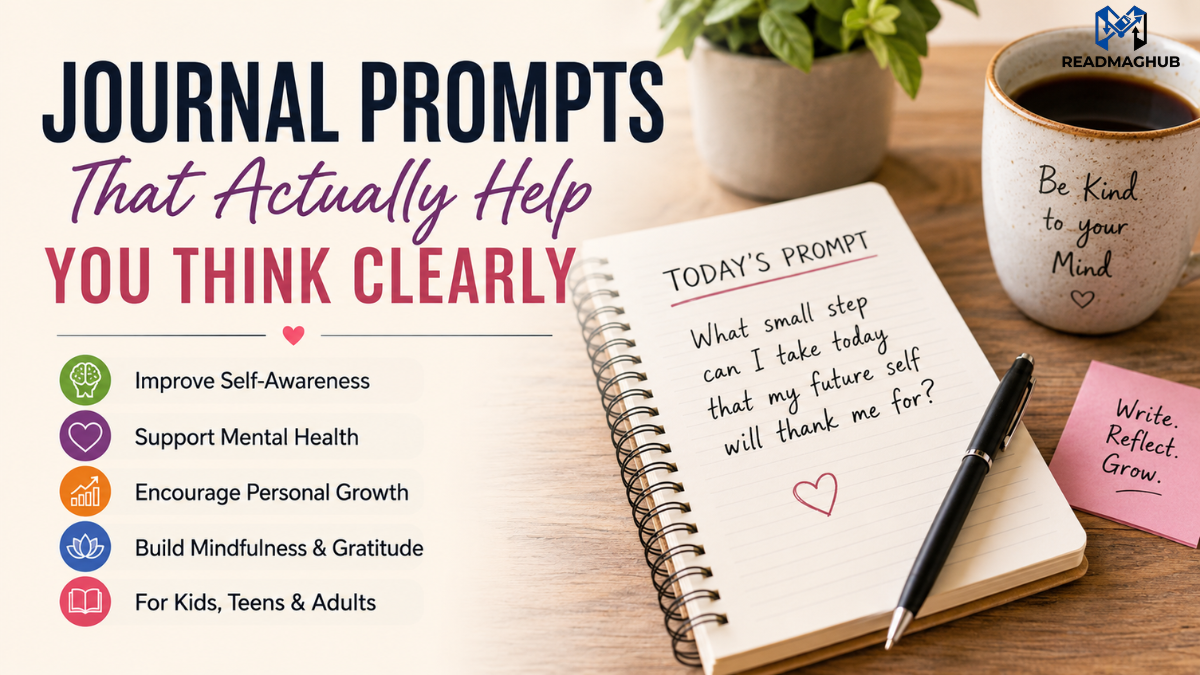

Some thoughts stay stuck in your head because they never get fully expressed. You replay conversations, worry about the future, or feel emotionally overwhelmed without knowing why. That’s where journal prompts can genuinely help.
Unlike random diary writing, journal prompts give your mind direction. They help you explore emotions, understand habits, process stress, and notice patterns you would normally ignore. Whether you’re using gratitude journal prompts to improve your mood, shadow work journal prompts to uncover emotional triggers, or daily journal prompts to organize your thoughts, the right question can create surprising clarity.
Many people start journaling expecting instant transformation and quit after a week because they “don’t know what to write.” In reality, consistency matters more than writing perfectly. Even five thoughtful minutes can improve self-awareness, emotional regulation, and decision-making.
This guide covers practical journal prompts for mental health, self reflection, mindfulness, students, teens, and personal growth. You’ll also learn how to make journaling feel natural instead of forced, plus a few uncommon insights that most journaling advice misses.
What Are Journal Prompts?
Journal prompts are guided questions or statements designed to help you think more deeply about your experiences, emotions, goals, or habits.
Instead of staring at a blank page, prompts give your brain a starting point.
They can help you:
- Reduce mental clutter
- Process emotions
- Improve self-awareness
- Build gratitude
- Explore creativity
- Track growth over time
- Strengthen emotional resilience
Some prompts are light and fun, while others encourage deep emotional reflection.
For example:
- “What made me smile today?”
- “What fear is secretly controlling my decisions?”
- “What version of myself am I becoming?”
The value comes from answering honestly, not perfectly.
Why Journal Prompts Work Better Than Free Writing
Free writing works for some people, but many struggle because the brain naturally avoids uncomfortable thoughts.
Prompts create structure. They gently push your attention toward areas you may avoid.
One overlooked benefit of journaling is this:
Writing slows emotional reactions
When you write feelings down, your brain shifts from emotional processing to language processing. That small shift can reduce emotional intensity and help you think more clearly.
Another unique insight:
People often discover recurring emotional themes after several weeks of journaling. You may notice the same insecurity, fear, or relationship pattern showing up repeatedly. That awareness is often the first real step toward change.
Daily Journal Prompts for Clarity and Focus
Daily journal prompts help create consistency without feeling overwhelming.
Try these:
- What is taking most of my mental energy today?
- What would make today feel meaningful?
- What do I need more of right now?
- What drained me yesterday?
- What am I avoiding?
- What small win can I celebrate today?
- What thoughts keep repeating lately?
- What do I need to forgive myself for?
- What matters most this week?
- What would help me feel calmer tonight?
These prompts work especially well in the morning or before bed.
Morning Journal Prompts to Start the Day Intentionally
Morning journal prompts can shape your mindset before distractions begin.
Helpful Morning Questions
- What kind of energy do I want to bring into today?
- What is one thing I can control today?
- How do I want people to feel around me?
- What deserves my attention most?
- What habit would improve my day immediately?
- What am I grateful for this morning?
- What challenge might appear today, and how can I respond calmly?
A useful trick:
Don’t overthink your answers. Fast, honest responses are usually more revealing than polished ones.
Gratitude Journal Prompts That Feel Genuine
Many gratitude exercises feel repetitive because people list obvious things without emotional detail.
Instead of writing:
“I’m grateful for my family.”
Try:
“What specific moment with someone made me feel supported recently?”
That creates emotional connection rather than a generic statement.
Gratitude Journal Prompts
- What comfort do I often take for granted?
- Who made my life easier recently?
- What difficult experience taught me something valuable?
- What memory always makes me smile?
- What part of my daily routine quietly improves my life?
- What challenge helped me grow stronger?
- What simple thing would I miss if it disappeared tomorrow?
Journal Prompts for Mental Health
Journal prompts for mental health can help identify emotional triggers, stress patterns, and coping needs.
They are not a replacement for therapy, but they can support emotional awareness.
Mental Health Journal Prompts
- What emotion have I been suppressing lately?
- What situations make me feel emotionally unsafe?
- When do I feel most emotionally exhausted?
- What thought pattern keeps hurting me?
- What would I say to a friend feeling exactly like this?
- What helps me feel grounded?
- What boundaries do I need right now?
- What am I carrying that no longer belongs to me?
Important Reminder
Journaling should not become emotional self-punishment. If prompts consistently leave you overwhelmed, choose gentler reflection topics or pause temporarily.
Shadow Work Journal Prompts for Deeper Self Discovery
Shadow work journal prompts explore hidden emotions, insecurities, fears, and reactions.
This type of journaling can feel intense because it asks difficult questions.
Shadow Work Journal Prompts
- What criticism affects me most deeply?
- What traits in others secretly trigger me?
- What childhood belief still affects my decisions?
- When do I become defensive?
- What fear controls my relationships?
- What version of myself do I hide from people?
- What emotional wound keeps repeating in different situations?
- What am I pretending not to care about?
One uncommon insight:
Shadow work becomes more effective when you focus on curiosity instead of judgment. The goal is understanding yourself, not attacking yourself.
Journal Prompts for Self Growth
Personal growth journaling works best when it combines reflection with action.
Journal Prompts for Self Growth
- What habit is limiting my progress?
- What kind of person do I want to become?
- What fear has stopped me from growing?
- What skill would improve my life most?
- What lesson did this year teach me?
- What am I tolerating that drains my energy?
- What would my future self thank me for doing now?
- Where am I making excuses?
Growth-focused journaling helps bridge the gap between intention and behavior.
Journal Prompts for Self Discovery
Self discovery journaling helps uncover personal values, identity, and emotional needs.
Journal Prompts for Self Discovery
- What makes me feel most alive?
- What values matter most to me?
- When do I feel most authentic?
- What parts of myself have changed recently?
- What environments help me thrive?
- What relationships energize me?
- What do I truly want more of in life?
- What version of success actually feels meaningful to me?
Self Reflection Journal Prompts
Self reflection journal prompts are useful after stressful events, major decisions, or emotional conflicts.
Self Reflection Questions
- What did I learn about myself recently?
- What could I have handled better?
- What assumptions turned out to be wrong?
- What emotional pattern keeps repeating?
- What am I proud of lately?
- What feedback do I resist hearing?
- What am I learning to accept?
Reflection creates awareness, but awareness only matters if it changes future behavior.
Journal Prompts for Self Love
Self love journaling is not about pretending everything is perfect. It’s about developing a healthier relationship with yourself.
Journal Prompts for Self Love
- What qualities make me valuable beyond achievement?
- What do I appreciate about my personality?
- What unrealistic pressure do I place on myself?
- What compliments do I struggle to accept?
- What does kindness toward myself actually look like?
- What would happen if I stopped comparing myself?
- What do I deserve more of emotionally?
Mindfulness Journal Prompts
Mindfulness journaling focuses attention on the present moment.
Mindfulness Journal Prompts
- What sensations do I notice right now?
- What thoughts are passing through my mind?
- What sounds can I hear at this moment?
- What emotion needs acknowledgment today?
- What small moment did I almost miss today?
- What currently feels peaceful?
Mindfulness prompts can be especially helpful during periods of anxiety or overstimulation.
Journal Prompts for Kids, Teens, and Students
Different age groups benefit from different journaling styles.
Journal Prompts for Kids
- What made you laugh today?
- If you could invent anything, what would it be?
- What is your favorite memory this week?
- What makes you feel brave?
- What would your dream day look like?
Journal Prompts for Middle School
- What friendship quality matters most to you?
- What challenge are you dealing with right now?
- What makes school stressful sometimes?
- What talent do you want to improve?
- What makes you feel confident?
Journal Prompts for High School Students and Teens
- What pressure affects you most right now?
- What future excites you?
- What social situation feels difficult lately?
- What motivates you to keep going?
- What kind of adult do you hope to become?
Teen journaling works best when it feels private and judgment-free.
Fun Journal Prompts to Spark Creativity
Not every journaling session needs to be serious.
Fun Journal Prompts
- If your life had a soundtrack, what songs would be on it?
- What fictional world would you live in?
- What would you do with unlimited free time?
- If you could relive one day, which would it be?
- What random skill would you love to master?
- What would your perfect weekend look like?
Fun prompts help reduce pressure and keep journaling enjoyable.
Common Journaling Mistakes People Make
1. Treating Journaling Like Homework
You don’t need perfect grammar or deep insights every day.
2. Writing Only When Things Go Wrong
Positive reflection matters too.
3. Being Too Vague
Specific answers create better emotional clarity.
4. Expecting Instant Transformation
The benefits usually appear gradually through repeated reflection.
5. Re-reading Old Entries Too Soon
Some people become overly critical of themselves instead of noticing growth.
How to Build a Journaling Habit That Actually Lasts
The best journaling routine is the one you’ll realistically maintain.
Simple Ways to Stay Consistent
- Start with 5 minutes
- Use one prompt daily
- Keep your journal visible
- Don’t force long entries
- Write honestly instead of impressively
- Choose prompts based on your emotional needs
A surprisingly effective strategy:
Match prompts to your energy level. Deep journal prompts work better when emotionally calm, while simple prompts are better during stressful periods.
Deep Journal Prompts for Emotional Clarity
These prompts encourage deeper reflection.
Deep Journal Prompts
- What truth about myself am I avoiding?
- What emotional pain still influences my decisions?
- What relationship shaped me the most?
- What am I afraid people will discover about me?
- What belief about myself needs to change?
- What would emotional freedom look like for me?
- What part of my life feels emotionally unfinished?
Use these slowly and thoughtfully.
FAQ About Journal Prompts
What are the best journal prompts for beginners?
The best prompts for beginners are simple and emotionally accessible. Questions about gratitude, daily experiences, or small goals help build consistency without pressure. Starting with easy prompts makes journaling feel less intimidating.
How often should I use journal prompts?
There’s no perfect schedule. Some people journal daily, while others write a few times per week. Consistency matters more than frequency. Even short entries can create long-term self-awareness.
Are journal prompts good for mental health?
Journal prompts for mental health can support emotional processing, stress management, and self-reflection. They help organize thoughts and identify patterns. However, journaling is not a substitute for professional mental health care when deeper support is needed.
What are shadow work journal prompts?
Shadow work journal prompts focus on hidden emotions, insecurities, fears, and behavioral patterns. They encourage deeper self-awareness and emotional honesty. These prompts are often more intense than general journaling prompts.
Can journal prompts help with self growth?
Yes. Journal prompts for self growth help clarify goals, identify limiting habits, and encourage intentional reflection. Over time, they can improve decision-making and emotional awareness.
What are good journal prompts for teens?
Teens often respond well to prompts about identity, friendships, stress, goals, and confidence. The most effective prompts feel relatable rather than overly therapeutic or formal.
Conclusion
Journal prompts are more than writing exercises. They’re tools for understanding yourself more clearly. Whether you use gratitude journal prompts to shift perspective, mindfulness journal prompts to stay present, or deep journal prompts to process emotions, the real value comes from honest reflection over time.
You don’t need perfect answers or long entries to benefit. Small moments of self-awareness often lead to meaningful personal growth. The key is consistency, curiosity, and giving yourself permission to write truthfully.
A single thoughtful question can sometimes reveal more than hours of overthinking.