
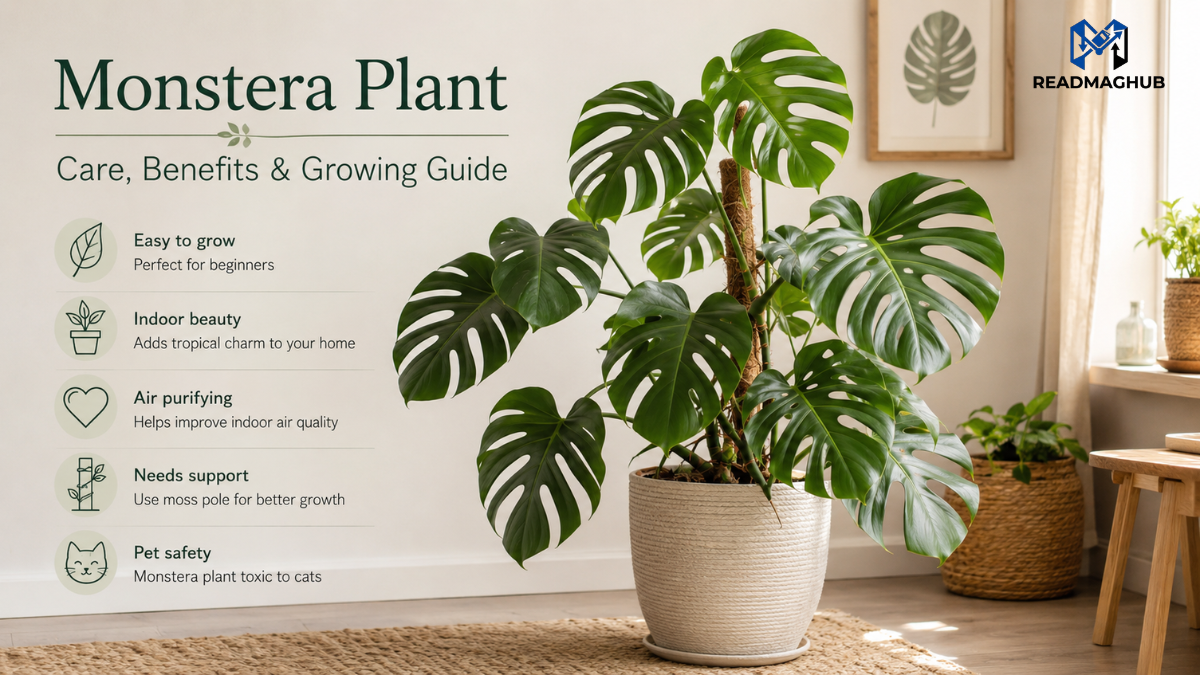

If you’ve ever walked into a room and admired a lush tropical plant with dramatic split leaves, chances are you’ve seen a monstera plant. These stunning houseplants have become a favorite among plant enthusiasts because they bring a bold, tropical feel to homes while remaining relatively easy to maintain.
However, many owners quickly discover that growing a healthy monstera isn’t always as simple as placing it in a corner and watering it occasionally. Yellow leaves, slow growth, drooping stems, and a lack of leaf splits are common problems. Understanding proper monstera plant care can make the difference between a struggling plant and one that becomes the centerpiece of your indoor space.
This guide covers everything you need to know, from choosing the right variety and understanding growth habits to providing proper support and avoiding common mistakes. Whether you’re considering a monstera plant for sale, already own a large monstera plant, or are interested in a mini monstera plant, you’ll find practical, real-world advice to help your plant thrive for years.
What Is a Monstera Plant?
The monstera plant belongs to a group of tropical plants native to Central and South America. They naturally grow beneath rainforest canopies, climbing trees while searching for sunlight.
Their signature feature is the development of holes and splits in mature leaves, known as fenestrations. These unique leaf patterns have helped monsteras become one of the most recognizable indoor plants worldwide.
Popular characteristics include:
- Large glossy green leaves
- Fast growth under proper conditions
- Adaptability to indoor environments
- Long lifespan with proper care
- Natural climbing growth habit
An indoor monstera plant can grow surprisingly large, often reaching several feet tall when given enough space and support.
Popular Monstera Plant Types
Not all monsteras look the same. Several varieties are commonly available for home growers.
Monstera Deliciosa
The most famous variety and the one most people picture when discussing a monstera plant.
Features:
- Large split leaves
- Vigorous growth
- Can become a large indoor specimen
- Excellent for statement decor
Monstera Adansonii
Often called the Swiss Cheese Plant.
Features:
- Smaller leaves
- More holes than splits
- Great for hanging baskets
- Compact growth
Monstera Dubia
A rarer climbing variety with unique juvenile leaves that lie flat against surfaces.
Variegated Monstera
Highly sought after because of white, cream, or yellow leaf patterns.
Features:
- Slower growth
- Higher maintenance
- More expensive than standard varieties
Mini Monstera Plant
Despite its name, the mini monstera plant is not a true monstera. It belongs to a different plant family but has similar leaf shapes.
Benefits include:
- Faster growth
- Easier management in small spaces
- Ideal for apartments
Monstera Plant Care: The Complete Guide
Proper monstera plant care revolves around replicating its tropical environment as closely as possible.
Light Requirements
Monsteras thrive in bright, indirect sunlight.
Best locations include:
- Near east-facing windows
- Several feet from south-facing windows
- Bright rooms with filtered light
Avoid:
- Intense afternoon sun
- Dark corners
- Constant direct sunlight
A practical observation many plant owners miss is that leaf splitting depends heavily on light quality. Healthy mature leaves often remain solid if light levels are too low.
Watering
One of the biggest mistakes is overwatering.
A simple rule:
- Water when the top 2–3 inches of soil feel dry
- Reduce watering during winter
- Ensure excess water drains freely
Signs of overwatering:
- Yellow leaves
- Mushy stems
- Root rot
- Fungus gnats
Signs of underwatering:
- Crispy leaf edges
- Curling leaves
- Slow growth
Humidity
Monsteras appreciate moderate to high humidity.
Ideal humidity:
- 50–70%
Helpful methods:
- Humidifiers
- Pebble trays
- Grouping plants together
Temperature
Keep temperatures between:
- 65°F–85°F (18°C–29°C)
Avoid:
- Cold drafts
- Air-conditioning vents
- Sudden temperature swings
Choosing the Right Soil
Healthy roots require a well-draining soil mix.
A balanced monstera soil often contains:
- Potting soil
- Orchid bark
- Perlite
- Coconut coir
This combination provides:
- Good drainage
- Adequate moisture retention
- Strong root aeration
One overlooked insight is that monsteras often grow better in chunkier soil mixes than standard houseplants because their roots naturally experience abundant airflow in the wild.
Monstera Plant Support: Why It Matters
Many owners underestimate the importance of monstera plant support.
In nature, monsteras climb trees rather than growing upright on their own.
Support options include:
- Moss poles
- Coco coir poles
- Wooden planks
- Trellises
Benefits of support:
- Larger leaves
- More leaf splits
- Faster growth
- Stronger stems
A fascinating observation from experienced growers is that leaves often become significantly larger after a plant starts climbing vertically. The plant interprets climbing as a signal that it is approaching the forest canopy.
Monstera Plant Benefits
The monstera plant benefits extend beyond simple decoration.
Improves Interior Design
Monsteras instantly add a tropical, modern appearance to any room.
Creates a Relaxing Environment
Many people report that indoor greenery makes workspaces and living areas feel calmer and more inviting.
Encourages Plant Care Skills
Because monsteras are forgiving, they help beginners build confidence before caring for more demanding plants.
Long-Term Growth Satisfaction
Unlike many decorative plants, monsteras can remain attractive for decades with proper care.
Space Enhancement
Large leaves naturally soften harsh architectural lines and make rooms feel more balanced.
Monstera Plant Toxic to Cats: What Pet Owners Should Know
A common concern is whether a monstera plant toxic to cats issue exists.
The answer is yes.
Monsteras contain calcium oxalate crystals that can irritate pets if chewed.
Possible symptoms include:
- Mouth irritation
- Drooling
- Pawing at the mouth
- Swelling
- Difficulty swallowing
If your cat or dog consumes part of the plant, contact a veterinarian for guidance.
Pet-safe management tips:
- Place plants out of reach
- Use hanging planters
- Create plant-free pet zones
How to Grow a Large Monstera Plant
Many plant owners dream of owning a dramatic large monstera plant with enormous split leaves.
Provide Strong Light
Bright indirect light fuels larger leaf production.
Use Vertical Support
Climbing support encourages mature growth patterns.
Repot When Necessary
Move up one pot size when roots begin circling the container.
Feed During Growing Season
Apply a balanced fertilizer every 4–6 weeks during spring and summer.
Be Patient
Large monsteras develop gradually. Consistent care produces better results than aggressive fertilizing or excessive watering.
Buying a Monstera Plant: What to Look For
If you’re searching for a monstera plant for sale, inspect the plant carefully before purchasing.
Look for:
- Firm stems
- Healthy green leaves
- Active new growth
- No signs of pests
- Well-established root systems
Avoid plants with:
- Yellowing leaves
- Black spots
- Excessively wet soil
- Visible insects
A smaller healthy plant often outperforms a larger stressed plant over the long term.
Common Monstera Care Mistakes
Overwatering
The most common cause of plant decline.
Insufficient Light
Leads to slow growth and smaller leaves.
Ignoring Support
Results in leggy growth and reduced leaf size.
Poor Drainage
Increases the risk of root problems.
Overfertilizing
Can damage roots and cause leaf burn.
Frequent Relocation
Monsteras prefer consistency and may react negatively to constant movement.
Seasonal Care Tips
Spring
- Resume fertilizing
- Repot if necessary
- Expect active growth
Summer
- Increase watering frequency if needed
- Monitor humidity levels
Fall
- Reduce fertilizer applications
- Watch for slowing growth
Winter
- Water less often
- Protect from cold drafts
- Maintain stable temperatures
Frequently Asked Questions
How often should I water a monstera plant?
Water when the top few inches of soil feel dry. The exact schedule varies based on temperature, humidity, pot size, and lighting conditions. Most indoor plants need watering every one to two weeks. Always check the soil before watering.
What is the best location for an indoor monstera plant?
The best location offers bright, indirect sunlight. A spot near an east-facing window or a few feet away from a bright south-facing window typically works well. Avoid harsh afternoon sun and very dark areas.
Does a monstera plant need support to grow properly?
While it can survive without support, providing a moss pole or trellis significantly improves growth. Support encourages larger leaves, stronger stems, and better fenestration. It also mimics the plant’s natural climbing behavior.
Is a mini monstera plant the same as a regular monstera?
No. The mini monstera plant is actually a different species. Although its leaves resemble a true monstera, its growth habits and botanical classification are different.
Why are my monstera leaves not splitting?
Insufficient light is often the primary reason. Young plants also produce solid leaves before developing fenestrations. Better lighting, maturity, and vertical support usually encourage leaf splitting.
Are monstera plants safe around cats?
No. A monstera plant toxic to cats concern is valid because the plant contains calcium oxalate crystals. If ingested, it can cause irritation and discomfort. Keep the plant away from pets whenever possible.
Conclusion
The monstera plant remains one of the most rewarding houseplants because it combines dramatic beauty with relatively straightforward care requirements. By providing bright indirect light, proper watering, chunky soil, and reliable climbing support, you can encourage stronger growth and larger, healthier leaves.
Whether you’re growing a compact indoor specimen, training a climbing giant, or considering a new monstera plant for sale, success comes from understanding how these tropical plants naturally grow. Small adjustments—such as adding a support pole or improving light exposure—often create the biggest improvements.
With patience and consistent care, a monstera can become a stunning long-term feature in your home, delivering beauty and satisfaction for many years.