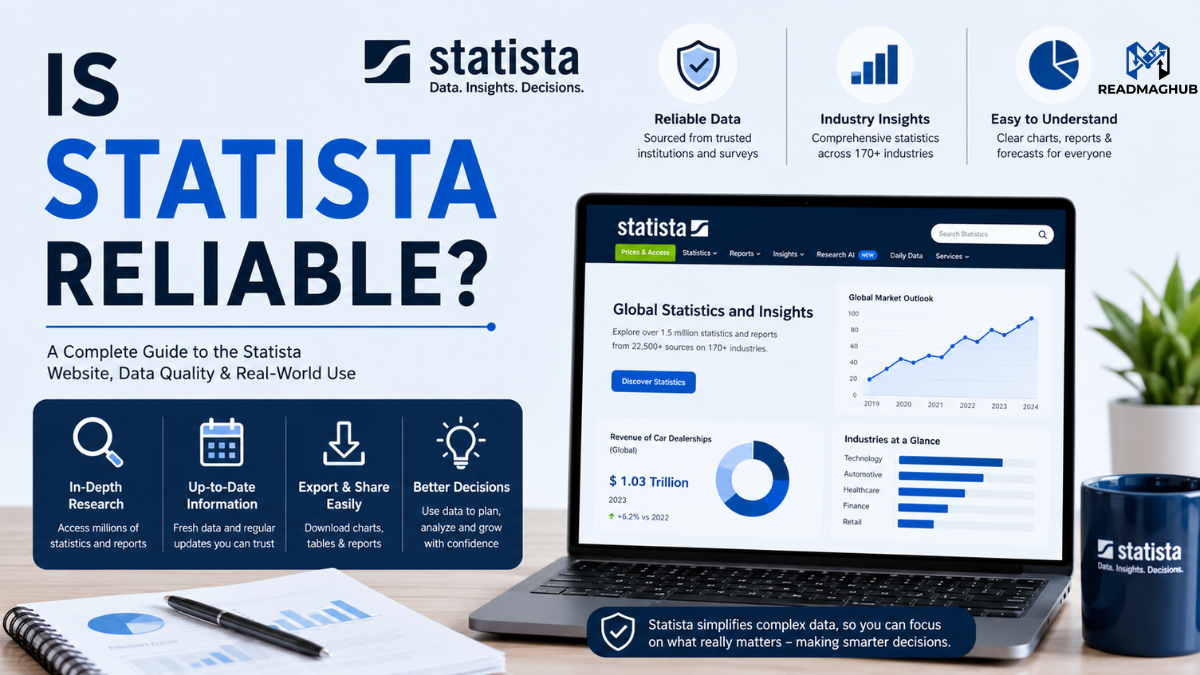

If you’ve ever searched for market data online, chances are you’ve come across the statista platform. Whether you’re a student writing a paper, a marketer preparing a campaign, or a business owner researching industry trends, finding trustworthy statistics can be frustrating. Many websites either provide outdated numbers, incomplete reports, or data with no clear source.
That’s where the statista website stands out. It brings together statistics, reports, consumer insights, and industry forecasts in one place. But many people still ask questions like: is statista reliable? or is statista a reliable source for academic and business research?
This article explains how Statista works, where its data comes from, when you should trust it, and where you should still be cautious. You’ll also learn practical ways professionals use the platform, including examples like statista car dealership revenue research and market forecasting. By the end, you’ll know whether Statista is worth using for your own research, business decisions, or content strategy.
What Is Statista?
Statista is an online data and market research platform that collects statistics from thousands of trusted sources worldwide.
The platform covers industries such as:
- Automotive
- Technology
- Healthcare
- Finance
- Retail
- Education
- Entertainment
- Real estate
- Consumer behavior
Instead of searching dozens of government databases or research publications manually, users can access charts, reports, forecasts, and infographics in one searchable platform.
One major reason people use Statista is convenience. It simplifies complex data into readable charts and downloadable reports that save hours of research time.
How the Statista Website Works
The statista website acts as both a research aggregator and a publisher of original surveys.
Here’s how its content is generally organized:
1. Aggregated Statistics
Statista gathers information from:
- Government agencies
- Industry associations
- Research institutions
- Financial reports
- Market research firms
For example, automotive revenue data may come from industry regulators, dealership associations, or company filings.
2. Original Consumer Surveys
Statista also conducts its own surveys covering:
- Shopping habits
- Brand preferences
- Media consumption
- Consumer trends
- Digital behavior
This gives businesses quick access to consumer insights without running expensive research projects themselves.
3. Forecasting and Market Outlooks
The platform creates industry projections using statistical modeling and historical data.
These reports are commonly used for:
- Investor presentations
- Startup planning
- Market sizing
- Content research
- Competitor analysis
Is Statista Reliable?
The short answer is: yes, in most cases.
However, understanding why matters more than a simple yes or no.
Why Many Professionals Trust Statista
The reason many researchers believe statista is reliable comes down to transparency and source attribution.
Most charts include:
- Original source names
- Publication dates
- Methodology notes
- Geographic scope
- Survey sample details
That’s a strong sign of credibility because you can verify where the information came from.
Universities, marketing agencies, consultants, and journalists regularly use Statista for preliminary research and industry overviews.
Is Statista a Reliable Source for Academic Work?
This is where nuance matters.
Many students ask: is statista a reliable source for essays, dissertations, or research papers?
The answer depends on how you use it.
When Statista Is Reliable for Academia
Statista is useful for:
- Finding market trends
- Discovering source references
- Accessing summarized industry data
- Supporting business presentations
- Initial topic research
When You Should Be Careful
Professors sometimes prefer citing the original source rather than Statista itself.
For example:
- Instead of citing Statista’s chart about car sales, you may need to cite the original government transportation agency.
- Instead of citing a summarized health statistic, your instructor may want the official medical journal.
Practical Academic Tip
A smart approach is:
- Use Statista to discover data quickly
- Check the original source listed below the chart
- Cite the original source whenever possible
This saves time while improving credibility.
That’s one of the most overlooked strategies students rarely hear about.
Real-World Example: Statista Car Dealership Revenue Research
One practical use case is researching statista car dealership revenue data.
Automotive businesses often use Statista to analyze:
- Average dealership revenue
- Vehicle sales trends
- EV adoption forecasts
- Regional market growth
- Consumer financing behavior
For example, a dealership owner preparing a business expansion plan may compare:
- Annual dealership revenue trends
- Luxury vs economy vehicle demand
- Used car profitability
- Online vehicle purchasing trends
Instead of collecting data from multiple automotive associations individually, Statista centralizes much of this information.
Unique Insight #1
Many small businesses misuse revenue statistics because they compare global averages with local markets. Statista data becomes far more useful when filtered by region, purchasing power, and customer demographics instead of relying on broad global figures.
That distinction often changes business decisions dramatically.
Who Uses Statista Most?
Statista serves different audiences in different ways.
Business Owners
Businesses use Statista for:
- Market sizing
- Competitor benchmarking
- Industry forecasts
- Consumer trend analysis
Content Creators and SEO Professionals
Many digital marketers use Statista statistics to:
- Support blog content
- Improve article authority
- Add data-driven insights
- Increase trust signals
Students and Researchers
Students rely on it for:
- Research papers
- Presentation slides
- Industry analysis
- Thesis background research
Investors and Analysts
Financial professionals use industry forecasts to evaluate:
- Market opportunities
- Growth sectors
- Consumer spending trends
Advantages of Using Statista
Easy-to-Understand Data
Charts and graphs simplify complex information.
This is especially useful for people who are not professional statisticians.
Time Savings
Instead of searching multiple databases individually, users can find organized information quickly.
Broad Industry Coverage
Few platforms cover as many industries in one place.
Updated Information
Many datasets are refreshed regularly.
That matters in fast-changing industries like technology or automotive sales.
Export Features
Users can often download:
- Charts
- PDFs
- Spreadsheets
- Presentation-ready visuals
Limitations You Should Know
Even though statista is reliable, it is not perfect.
Some Reports Are Behind Paywalls
Free users may only access limited statistics.
Premium reports can become expensive for individuals.
Not Every Dataset Is Original
Some people mistakenly assume Statista collects all data itself.
In reality, much of the platform aggregates third-party research.
Methodology Varies
Different sources use different research methods.
That means not all datasets have equal quality.
Forecasts Are Not Guarantees
Market predictions should always be treated as estimates, not certainty.
Common Mistakes People Make With Statista
Using Old Statistics
Some users forget to check publication dates.
In fast-moving industries, outdated data can create misleading conclusions.
Ignoring Regional Context
Global averages may not reflect local realities.
This is especially important in automotive, retail, and digital commerce sectors.
Trusting Every Chart Equally
Some charts come from highly authoritative institutions, while others come from smaller surveys with limited samples.
Always review the original source.
Copying Statistics Without Interpretation
Data alone rarely tells the full story.
Professionals combine statistics with industry context and practical experience.
How Professionals Verify Statista Data
Experienced researchers usually cross-check important statistics.
They compare Statista findings with:
- Government databases
- Industry reports
- Company annual reports
- Academic publications
Unique Insight #2
One overlooked advantage of Statista is trend comparison rather than exact numbers. Professionals often care more about whether a market is growing or shrinking than whether a figure is perfectly precise.
That makes Statista especially valuable for strategic planning.
Is Statista Worth Paying For?
That depends on your needs.
Worth It For
- Agencies
- Businesses
- Researchers
- Journalists
- Marketing teams
- Students working on advanced projects
Maybe Not Worth It For
- Casual browsing
- One-time school assignments
- Users needing only a few statistics
If you regularly create reports, presentations, or SEO content, the time savings alone can justify the subscription.
How to Use Statista More Effectively
Start Broad, Then Narrow Down
Search general industry topics first before focusing on niche data.
Always Read the Source Notes
The small details below charts often matter more than the headline statistic.
Compare Multiple Datasets
Don’t rely on one statistic alone.
Patterns across multiple datasets usually reveal better insights.
Use Data to Support Decisions, Not Replace Them
Statistics are tools, not automatic answers.
Real-world context still matters.
Unique Insight #3
The most successful researchers use Statista as a “discovery engine” rather than a final authority. They use it to identify patterns, then validate the most critical numbers independently.
That workflow dramatically improves research quality.
FAQ
Is Statista reliable for business research?
Yes, Statista is widely used for business research because it compiles data from trusted institutions, industry reports, and original surveys. However, professionals often verify critical figures with primary sources before making major decisions. It works best for market overviews and trend analysis.
Is Statista a reliable source for students?
Statista can be reliable for students when used correctly. It helps locate industry data quickly and often references original sources. Many professors still prefer citations from the primary source rather than Statista summaries.
Why do companies use the Statista website?
Companies use the Statista website to save time gathering market data, consumer insights, and industry forecasts. It helps businesses analyze trends, prepare reports, and support strategic planning with data-driven insights.
Can I trust Statista car dealership revenue reports?
In most cases, yes. Automotive revenue reports on Statista are often sourced from industry organizations and financial records. Still, dealerships should compare the data with local market conditions and regional sales trends before making decisions.
Does Statista create all its own data?
No. Statista produces some original surveys and forecasts, but much of its content comes from third-party sources like government agencies, industry associations, and research firms. Always review the source attribution for clarity.
Conclusion
Statista has become one of the most widely used research platforms because it simplifies access to statistics, market insights, and industry forecasts. Whether you’re a student, marketer, entrepreneur, or analyst, the platform can save significant research time while providing valuable trend data.
Still, understanding how to use it properly matters. The smartest users do not blindly trust every chart. Instead, they verify important information, examine source notes carefully, and combine statistics with real-world context.
If you’ve ever wondered is statista reliable or is statista a reliable source, the answer is generally yes — especially when used responsibly. Its real strength lies in helping people discover trends, compare markets, and make more informed decisions faster.