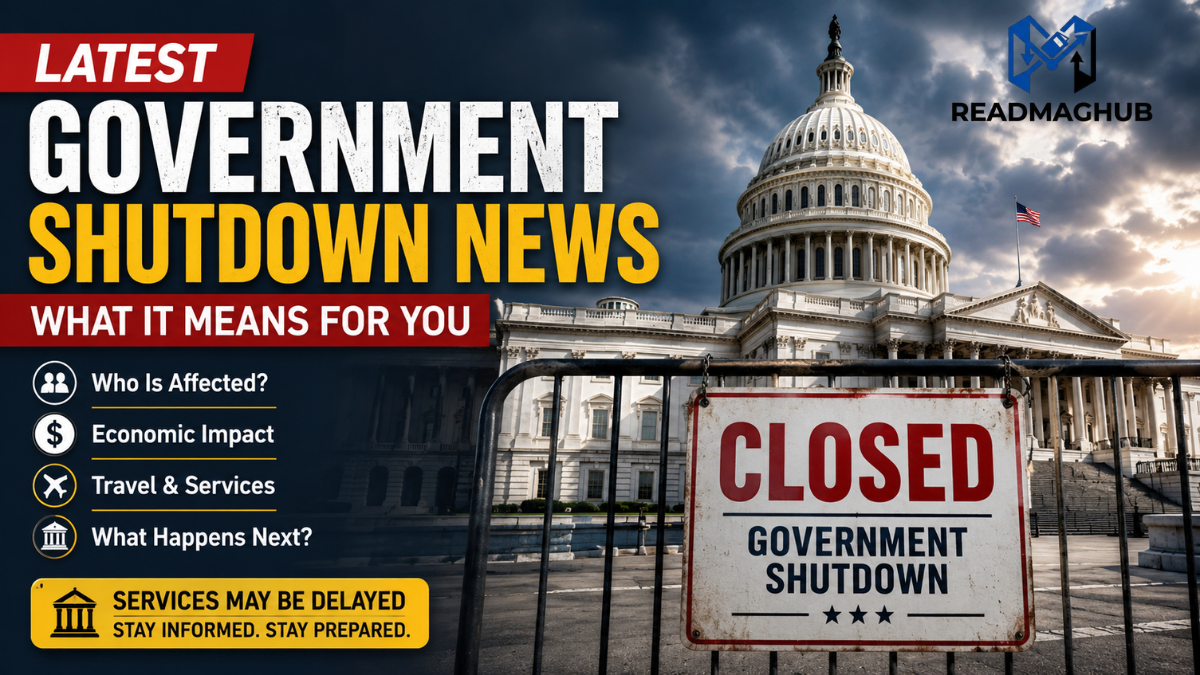

When headlines about a possible government shutdown start appearing, many Americans immediately worry about paychecks, travel delays, taxes, and public services. That reaction is understandable. The phrase “government shutdown news” sounds dramatic because it affects real people in real ways — from federal workers wondering about missed salaries to families trying to secure passports or benefits on time.
In recent years, shutdown threats have become more common in Washington politics, and the uncertainty alone can create financial stress across the country. Whether you follow politics closely or not, understanding how a shutdown works can help you make smarter decisions and avoid panic driven by confusing headlines.
This guide breaks down the latest government shutdown discussions in simple terms. You’ll learn what causes shutdowns, which services stop, who still gets paid, and why markets and everyday consumers pay attention to us government shutdown news today. We’ll also cover practical impacts that many articles overlook, including how shutdown fears quietly affect contractors, local businesses, and consumer confidence long before offices officially close.
What Is a Government Shutdown?
A government shutdown happens when Congress fails to pass funding legislation for federal agencies. Without approved funding, many parts of the federal government cannot legally continue normal operations.
In simple terms, the government runs out of authorized money to spend.
Shutdowns usually occur because lawmakers and the president cannot agree on:
- Federal spending levels
- Budget priorities
- Policy demands attached to funding bills
- Debt and deficit concerns
- Political negotiations between parties
Not every federal service stops during a shutdown. Essential operations continue, while non-essential functions may pause temporarily.
Essential vs. Non-Essential Services
Here’s the difference most people misunderstand:
Essential Services Continue
These usually include:
- Military operations
- Air traffic control
- Border security
- Social Security payments
- Medicare benefits
- Emergency medical services
- Federal law enforcement
Non-Essential Services May Pause
These often include:
- National park staffing
- Passport processing delays
- IRS customer support
- Federal research programs
- Some inspections and administrative services
One important detail many people miss: workers classified as “essential” often continue working without immediate pay until funding resumes.
Why Government Shutdown News Matters to Everyday Americans
Many people assume shutdowns only affect federal employees in Washington, D.C. In reality, the economic ripple effects spread much further.
Financial Stress for Workers
Hundreds of thousands of federal workers and contractors can face delayed income. Even temporary interruptions create problems with:
- Rent payments
- Mortgages
- Credit card bills
- Childcare costs
- Medical expenses
Contract workers are especially vulnerable because many do not receive back pay after shutdowns end.
Travel Disruptions
During intense shutdown periods, airports can experience staffing shortages. Travelers may face:
- Longer TSA lines
- Flight delays
- Reduced staffing at federal transportation offices
This is why us government shutdown news today often trends heavily during holiday travel seasons.
Delayed Government Services
Americans may encounter slower processing for:
- Tax refunds
- Small business loans
- Passport renewals
- Federal permits
- Housing assistance applications
For businesses depending on federal approvals, even short delays can become expensive.
How Often Do Government Shutdowns Happen?
Government shutdowns are not new, but they have become more politically visible over time.
Some shutdowns last only a few hours or days. Others stretch for weeks.
The Longest Shutdown in U.S. History
The longest modern shutdown lasted 35 days between late 2018 and early 2019. It affected around 800,000 federal workers and caused billions in economic losses.
That shutdown revealed something important many experts now recognize:
The uncertainty before a shutdown often damages the economy almost as much as the shutdown itself.
Businesses slow hiring, consumers reduce spending, and markets react cautiously when funding negotiations become unstable.
This psychological effect is one of the less-discussed realities behind government shutdown news.
What Happens Financially During a Shutdown?
A shutdown creates both immediate and hidden economic costs.
Direct Economic Impact
The federal government temporarily reduces spending activity. That affects:
- Federal salaries
- Government contracts
- Local economies near federal offices
- Consumer confidence
Even after reopening, some economic activity is never fully recovered.
Stock Market Reactions
Markets do not always crash during shutdowns, but investors pay attention to:
- Political instability
- Credit rating concerns
- Delayed economic reports
- Consumer spending weakness
Historically, markets react more strongly when shutdowns combine with debt ceiling disputes.
Small Businesses Feel It Too
One overlooked consequence involves small businesses that rely on federal operations.
Examples include:
- Cleaning contractors
- Security firms
- Cafeteria vendors
- IT consultants
- Tourism businesses near national parks
When government buildings close, these businesses may lose income immediately.
This “secondary impact economy” is rarely discussed in mainstream shutdown coverage but affects thousands of private-sector workers.
Common Myths About Government Shutdowns
Myth 1: The Entire Government Closes
This is false.
Critical services continue operating. Shutdowns mainly affect agencies dependent on annual congressional funding.
Myth 2: Social Security Stops Completely
Most Social Security payments continue because they are funded differently from annual spending bills.
However, customer service and processing delays can still happen.
Myth 3: Federal Workers Always Lose Pay
Historically, Congress has often approved back pay for furloughed federal employees after shutdowns end.
Contractors, however, frequently do not receive compensation for lost work time.
Myth 4: Shutdowns Save Money
In reality, shutdowns often cost taxpayers billions due to:
- Lost productivity
- Delayed projects
- Administrative restart costs
- Economic slowdown
The government usually spends additional money restarting paused operations afterward.
How Shutdown News Affects Public Confidence
One unique aspect of modern government shutdown news today is how quickly uncertainty spreads online.
Social media headlines, political commentary, and financial speculation can intensify public anxiety before anything officially happens.
Consumer Behavior Changes Quickly
People often respond by:
- Delaying major purchases
- Avoiding investments
- Cutting discretionary spending
- Increasing savings temporarily
This creates a broader economic slowdown even if the shutdown is short-lived.
Trust in Institutions Declines
Repeated shutdown threats can reduce public confidence in:
- Congress
- Budget planning
- Economic leadership
- Government reliability
This long-term trust issue is becoming one of the most significant consequences of recurring shutdown battles.
Practical Tips During a Potential Shutdown
If you’re concerned about current us government shutdown news, practical preparation matters more than panic.
1. Review Your Financial Cushion
If your income connects to federal work or contracts:
- Reduce unnecessary spending temporarily
- Build emergency savings if possible
- Prioritize essential bills
2. Handle Government Tasks Early
Avoid waiting until the last minute for:
- Passport renewals
- Permit applications
- Federal paperwork
- Tax-related requests
3. Watch Official Sources, Not Rumors
Shutdown discussions change quickly. Social media often spreads outdated or misleading information.
4. Expect Delays, Not Total Collapse
Most shutdowns create inconvenience rather than catastrophe.
Understanding this can help reduce unnecessary stress.
Why Shutdown Threats Keep Happening
Many Americans wonder why lawmakers repeatedly approach shutdown deadlines.
The answer involves politics, negotiation strategy, and budget complexity.
Political Leverage
Funding deadlines create pressure points. Political parties sometimes use shutdown risks to push policy priorities.
Deep Budget Disagreements
Congress often disagrees on:
- Defense spending
- Healthcare funding
- Immigration policy
- Social programs
- Tax priorities
These disagreements can stall funding bills.
Media Attention
Shutdown confrontations attract massive media coverage, which can motivate political positioning on both sides.
The Hidden Long-Term Effects of Shutdowns
Most news coverage focuses on immediate disruption, but longer-term effects deserve attention too.
Federal Hiring Problems
Repeated shutdown threats make government jobs appear less stable. That can hurt recruitment for skilled positions.
Burnout Among Workers
Employees forced to work without immediate pay or face furloughs may experience:
- Stress
- Financial anxiety
- Reduced morale
- Career uncertainty
International Reputation
Frequent shutdown crises can affect how global investors view U.S. political stability.
This matters because financial confidence influences borrowing costs and economic strength over time.
FAQ
What is the latest government shutdown news about?
Current government shutdown news usually centers around Congress attempting to pass funding bills before federal deadlines expire. Lawmakers negotiate spending priorities, and disagreements can create the risk of temporary shutdowns. News coverage often intensifies close to funding deadlines because markets, federal workers, and businesses all monitor the outcome closely.
Will Social Security payments stop during a government shutdown?
In most cases, Social Security payments continue during shutdowns because they are funded separately from annual congressional appropriations. However, some administrative services may experience delays. Customer support and processing times could become slower if staffing is reduced.
How does a government shutdown affect taxes?
A shutdown can delay some IRS operations, including customer support and certain tax processing services. Tax refunds may continue in some situations, depending on IRS operational guidance during that specific shutdown period. Delays are more likely during extended funding gaps.
Do federal employees get paid after a shutdown?
Historically, Congress has approved back pay for furloughed federal workers after shutdowns end. Essential employees often continue working without immediate pay until funding resumes. Federal contractors, however, are not always guaranteed compensation for lost time.
Why does the U.S. government keep facing shutdown threats?
Shutdown threats usually happen because Congress and the president disagree on spending bills or policy priorities. Budget negotiations have become increasingly political in recent years. Even when shutdowns are avoided, lawmakers often negotiate close to deadlines, creating repeated uncertainty.
How long can a government shutdown last?
Shutdowns can last anywhere from a few hours to several weeks. The duration depends on how quickly political leaders reach a funding agreement. The longest shutdown in modern U.S. history lasted 35 days.
Conclusion
Government shutdowns are more than political headlines. They affect workers, families, businesses, travel, financial confidence, and public trust. While many essential services continue operating, the uncertainty surrounding shutdown threats can still create real economic and emotional stress.
Understanding how shutdowns work helps separate facts from fear-driven speculation. Most shutdowns do not bring daily life to a halt, but they can create delays, financial pressure, and broader economic concerns that ripple far beyond Washington.
As government shutdown news continues dominating national conversations, staying informed through clear, reliable information is the best way to prepare calmly and make smart decisions for yourself and your family.