

Choosing a college isn’t just about rankings—it’s about finding a place where you can thrive academically, socially, and personally. If you’re exploring top liberal arts institutions, Amherst College likely keeps showing up—and for good reason. But what does it actually offer beyond prestige?
By the end, you’ll have a clear, practical understanding of whether Amherst fits your ambitions—and how to improve your chances of getting in.
Where Is Amherst College and What Is It Known For?
Amherst College is located in a small, intellectually vibrant town in Massachusetts. It’s part of the “Five College Consortium,” giving students access to multiple campuses and resources.
Key Highlights:
- Founded in 1821
- Elite liberal arts focus
- Small student body (around 1,800 students)
- Strong emphasis on undergraduate teaching
Unique Insight
Unlike many elite schools, Amherst has an open curriculum—meaning no core requirements. Students design their own academic path, which is rare even among top-tier colleges.
Amherst College Ranking and Reputation
The amherst college ranking consistently places it among the top liberal arts colleges in the U.S.
Why It Ranks So High:
- Exceptional faculty-to-student ratio
- Strong graduate outcomes
- Rigorous academics with flexible curriculum
Real-World Perspective
Rankings matter—but what truly sets Amherst apart is its focus on discussion-based learning, not large lectures. Students often describe classes as more like conversations than lectures.
Amherst College Acceptance Rate and Admissions
The amherst college acceptance rate is extremely selective, typically around 7–10%.
What Admissions Looks For:
- Strong academic performance
- Intellectual curiosity
- Unique personal perspective
- Meaningful extracurriculars
Amherst College Admissions Tips:
- Show independent thinking – They value originality over perfection
- Write authentic essays – Avoid generic “top student” narratives
- Demonstrate curiosity – Passion matters more than quantity of activities
Transfer Students
The amhersts college transfer acceptance rate is even more competitive, often lower than first-year admissions.
Unique Insight
Amherst is need-blind for international students, which is rare. That means your financial situation doesn’t affect your chances of admission.
Amhersts College Cost and Tuition
Understanding the amherst – college cost is critical before applying.
Estimated Annual Costs:
- Tuition: High (typical of elite private colleges)
- Room & board: Additional expense
- Total cost: Often exceeds $80,000/year
Financial Aid Advantage:
- 100% of demonstrated need met
- No loans in financial aid packages (in many cases)
Practical Tip
Don’t let the sticker price scare you. Many students pay significantly less due to generous aid.
Amherst College Campus and Student Life
Campus Features:
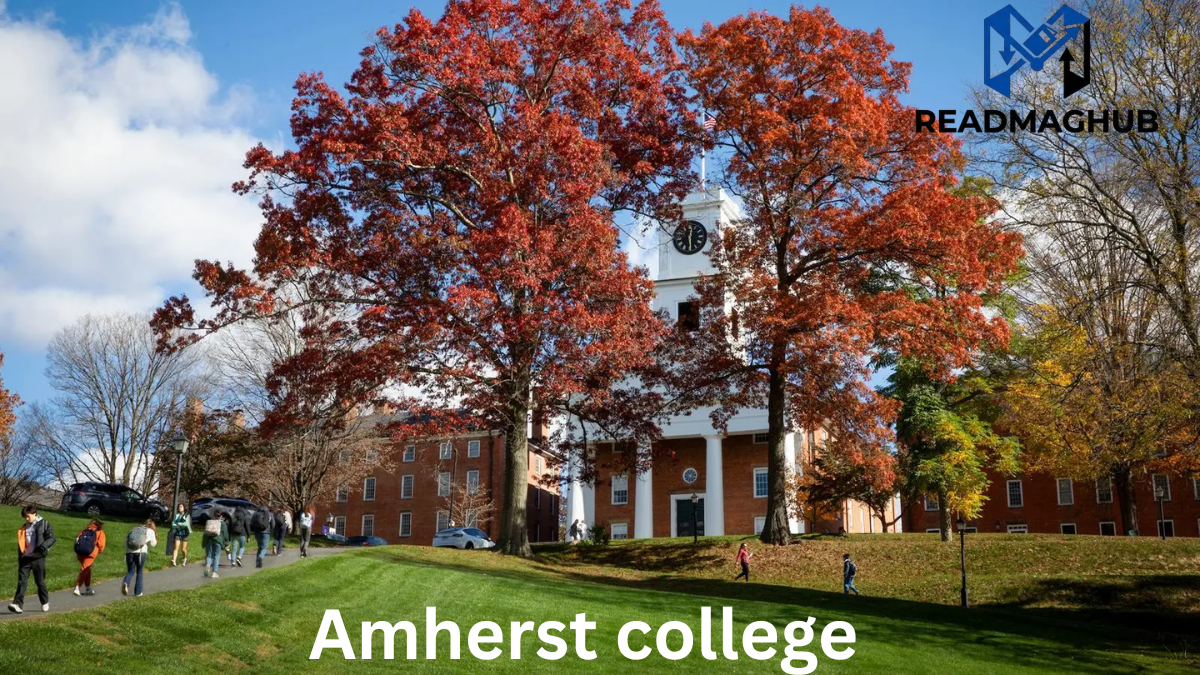
- Beautiful green quads
- Residential housing system
- Access to nearby colleges
Social Life:
- Tight-knit community
- Active clubs and organizations
- Cross-campus events with consortium schools
Amherst College Orientation
The amherst college orientation helps students transition smoothly with:
- Academic advising sessions
- Social bonding activities
- Campus exploration
Unique Insight
Because of its small size, students often build strong personal relationships with professors, which can significantly impact career opportunities later.
Amherst College Size and Academic Structure
Why Size Matters:
- More personalized attention
- Greater access to faculty
- Stronger community bonds
Amherst College Division
Amherst competes in NCAA Division III, meaning:
- Focus on academics first
- Competitive but less intense athletics
Amherst College Mascot and Traditions
The amherst college mascot is the Mammoth—a symbol of strength and resilience.
Traditions:
- Campus events and celebrations
- Athletic rivalries
- Academic symposiums
Real Insight
Even though athletics aren’t the main focus, student-athletes still receive strong academic support and balance.
Amherst College Notable Alumni
The amherst college notable alumni network is impressive.
Examples:
- Politicians
- Writers
- Business leaders
Why It Matters
A strong alumni network can open doors for internships, mentorships, and careers.
Amherst College Store and Campus Resources
The amherst college store provides:
- Books and academic materials
- College merchandise
- Daily essentials
Beyond that, students benefit from:
- Career services
- Research opportunities
- Study abroad programs
Is Amherst College a Good School?
So, is amherst college a good school? The short answer: yes—but it depends on your goals.
Best Fit For:
- Students who value academic freedom
- Those who prefer small class sizes
- Independent thinkers
Not Ideal For:
- Students wanting large campus life
- Those who prefer structured curriculums
Unique Insight
Amherst’s open curriculum can be a double-edged sword—it’s empowering, but requires strong self-discipline.
Common Mistakes Applicants Make
Avoid these if you’re serious about Amherst:
- Treating it like just another Ivy-level school
- Writing generic essays
- Ignoring the importance of intellectual curiosity
- Underestimating the importance of fit
FAQ Section
1. What is the Amherst College acceptance rate for 2026?
The acceptance rate remains highly competitive, typically under 10%. It varies slightly each year based on applicant volume. Strong academics and unique personal qualities are essential. Applying early doesn’t guarantee admission but may help in demonstrating interest.
2. How much is Amherst‘s College tuition and total cost?
Tuition is high, often exceeding $60,000 annually, with total costs around $80,000+. However, generous financial aid significantly reduces this for many students. Amherst meets full demonstrated need, making it more affordable than expected.
3. Where is Amherst College located?
Amhersts College is located in Amherst, Massachusetts, a small college town. It’s part of a consortium with nearby institutions, giving students access to broader academic and social opportunities.
4. Is Amherst’s College better than Ivy League schools?
It depends on your priorities. Amherst offers smaller classes and more personalized learning. Some students prefer it over Ivy League schools for its open curriculum and close-knit environment.
5. What is Amherst‘s College known for academically?
Amherst is known for its open curriculum, strong liberal arts education, and emphasis on critical thinking. Students can design their own academic paths without general education requirements.
6. Does Amherst‘s College have strong sports programs?
Yes, especially in Division III. Teams like basketball and baseball are competitive. However, academics remain the primary focus for most students.
Conclusion
Amherst College stands out not just for its prestige, but for its unique approach to education. With a flexible curriculum, strong financial aid, and a close-knit academic environment, it offers a distinctive college experience.
If you’re someone who values independence, deep learning, and meaningful connections, Amherst could be an excellent fit. But success here requires initiative—you won’t just follow a path, you’ll create your own.
Take time to reflect on your goals, learning style, and priorities. The right college isn’t just the most prestigious—it’s the one where you’ll grow the most.