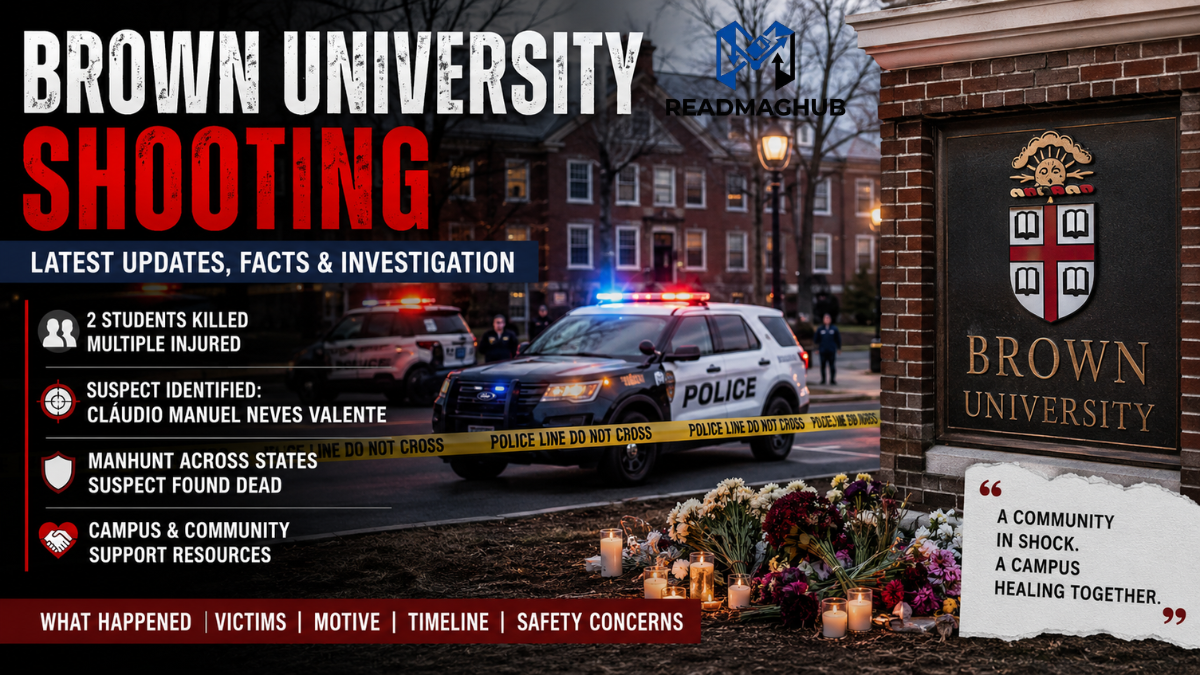

The brown university shooting shocked students, parents, and communities across the United States after reports emerged of a deadly shooting incident on the campus of Brown University in Rhode Island. What began as an ordinary finals-week afternoon quickly turned into a large-scale emergency response involving local police, federal investigators, medical teams, and campus officials.
For many people searching online, the biggest challenge has been separating verified facts from rumors circulating on social media. Questions about the brown university shooting suspect, the victims, the possible motive, and ongoing investigation continue to dominate public attention. Students and families have also been looking for reliable information about emergency resources, campus safety, and what happened during the chaotic hours after the attack.
This article breaks down the known facts, the latest updates from investigators, how the university responded, and the broader concerns raised by the tragedy. It also explains why this incident sparked national discussion about campus security, emergency preparedness, and student mental health support.
What Happened in the Brown University Shooting?
According to authorities, the shooting took place inside the Barus and Holley engineering building on the Brown University campus in Providence, Rhode Island, during final exam review sessions.
Reports stated that:
- Two students were killed
- Multiple people suffered injuries
- Students and faculty were ordered to shelter in place
- Police launched a large-scale manhunt for the suspect
- Federal agencies later joined the investigation
The incident created panic across campus as emergency alerts instructed students to lock doors, silence phones, and remain hidden until police secured the area.
One important detail that stood out in early reports was the confusion surrounding suspect identification. Initial online rumors incorrectly suggested arrests had been made before authorities clarified that the shooter remained at large for several days.
That confusion highlights a major issue during active emergencies: misinformation spreads faster than confirmed facts.
Brown University Shooting Today: Current Investigation Status
The brown university shooting today remains a heavily investigated case involving multiple law enforcement agencies.
Officials later identified the suspect as Cláudio Manuel Neves Valente, a 48-year-old Portuguese national. Investigators said he was eventually found dead in New Hampshire from what authorities described as a self-inflicted gunshot wound.
The investigation expanded after officials connected the suspect to another homicide involving an MIT professor in Massachusetts.
Current updates from authorities indicate:
- Investigators reviewed surveillance footage and digital evidence
- Hundreds of officers participated in the manhunt
- Federal agencies including the Federal Bureau of Investigation assisted local police
- Authorities examined the suspect’s background and travel history
- Officials analyzed recorded materials believed to explain planning behavior
While some investigative details remain sealed, law enforcement agencies later stated that the suspect appeared motivated by personal grievances and long-term resentment.
Brown University Shooting Suspect Name and Background
Searches for the brown university shooting suspect name increased dramatically after police publicly identified the alleged gunman.
Investigators described the suspect as someone who had reportedly planned aspects of the attack over an extended period. Authorities later claimed evidence suggested he had familiarity with engineering and academic environments connected to universities.
One unusual detail that gained public attention was the allegation that the suspect may have visited campus areas before the shooting. Reports from campus workers suggested suspicious behavior had been observed weeks earlier.
This raised difficult questions:
- Were warning signs missed?
- Could the attack have been prevented?
- Did security protocols fail to respond quickly enough?
These questions continue to shape discussions around campus safety policies nationwide.
Victims of Brown University Shooting
The victims of brown university shooting became the center of memorials and tributes across campus and online communities.
Authorities identified the two students killed during the attack, while several others suffered injuries ranging from critical to non-life-threatening conditions.
Students described the victims as:
- Academically driven
- Involved in campus organizations
- Active in student leadership and community work
- Well-known among classmates and professors
One of the strongest reactions came from students who said finals week amplified the emotional impact. Many survivors explained they associated classrooms and study sessions with safety and routine — not violence.
This psychological disruption is something trauma experts frequently discuss after campus attacks. Survivors often struggle with returning to classrooms, libraries, and public academic spaces.
A Less Discussed Impact: Academic Trauma
One insight often overlooked in coverage is the academic fallout after campus shootings.
Students affected by violent incidents commonly experience:
- Trouble concentrating
- Fear during lectures
- Panic responses to alarms or loud noises
- Withdrawal from campus life
- Delayed graduation plans
Universities increasingly recognize that recovery is not only emotional but also educational.
Brown University Shooting Emergency Resources
Following the attack, the university expanded access to counseling and support systems through several brown university shooting emergency resources.
These included:
- Emergency counseling services
- Trauma support hotlines
- Temporary academic accommodations
- Group therapy sessions
- Community memorial spaces
- Extended housing support for affected students
Mental health professionals often note that support after traumatic events must continue for months, not days.
One unique aspect of university-related tragedies is the layered stress students face afterward. Many are simultaneously coping with:
- Academic deadlines
- Family pressure
- Media attention
- Fear about returning to campus
- Survivor guilt
Experts say long-term recovery programs are far more effective than short-term crisis counseling alone.
Brown University Shooting Motive: What Investigators Believe
The brown university shooting motive remains a major focus of public discussion.
Federal investigators later suggested the suspect may have been driven by accumulated personal grievances and feelings of resentment. Authorities stated that evidence indicated long-term frustration connected to perceived failures and personal struggles.
However, officials also cautioned against oversimplifying motive in mass violence cases.
In many campus shootings, investigators find multiple overlapping factors, including:
- Isolation
- Psychological instability
- Obsessive thinking
- Personal resentment
- Desire for recognition or revenge
One important insight from behavioral experts is that motives are rarely as simple as a single triggering event.
Instead, violent acts often emerge from years of unresolved issues combined with opportunity, planning, and access to weapons.
Latest on Brown University Shooting and Campus Safety Concerns
The latest on brown university shooting has also fueled debate about campus security infrastructure.
Several reports questioned:
- Limited camera coverage in older buildings
- Open-access academic spaces
- Delayed suspect identification
- Communication systems during the emergency
Unlike many corporate buildings, universities are designed to remain accessible and open. That openness creates educational freedom but can also complicate security operations.
Unique Security Challenge on College Campuses
A less commonly discussed reality is that universities face a difficult balance:
| Open Campus Goals | Security Needs |
|---|---|
| Free movement | Controlled entry |
| Academic accessibility | Monitoring systems |
| Public events | Emergency lockdown capability |
| Community atmosphere | Threat prevention |
Many schools struggle to increase security without making campuses feel restrictive or heavily policed.
After the shooting, conversations expanded beyond Brown University to include national concerns about safety standards at colleges across the United States.
Brown University Shooting Reddit Discussions and Online Reactions
The brown university shooting reddit discussions reflected both public concern and the dangers of online speculation.
In the hours after the attack, social media platforms became flooded with:
- Unverified suspect claims
- Conflicting casualty numbers
- Edited videos
- Rumors about arrests
- Emotional survivor posts
This pattern has become increasingly common after major emergencies.
One practical lesson from this incident is the importance of relying on verified updates from:
- Law enforcement
- University emergency alerts
- Official press conferences
- Confirmed news organizations
False information during active crises can create panic and even interfere with emergency response efforts.
Brown University Shooting Video and Public Response
Searches for brown university shooting video increased rapidly after surveillance clips and media footage began circulating online.
However, trauma specialists often warn that repeatedly watching violent content can intensify stress and anxiety, especially for students and families directly affected.
Many universities now encourage students to limit exposure to graphic media after traumatic events.
This approach is based on research showing repeated viewing of violent footage can:
- Increase fear responses
- Trigger anxiety symptoms
- Reinforce traumatic memories
- Create secondary trauma in viewers
As a result, some mental health experts recommend focusing on verified written updates instead of consuming graphic or emotionally charged video clips repeatedly.
Rhode Island Brown University Shooting: Community Impact
The rhode island brown university shooting deeply affected not only the university but also the wider Providence community.
Residents reported:
- Increased fear near campus
- Heightened police presence
- School safety concerns
- Community vigils and memorials
- Ongoing anxiety during the manhunt
The incident also renewed broader conversations about:
- Gun violence in educational spaces
- Campus emergency preparedness
- Mental health intervention systems
- Threat reporting procedures
For many students, the emotional impact continued long after media coverage slowed down.
That long-term aftermath is something often missed in breaking news coverage.
Lessons Universities May Learn From the Shooting
The incident may influence future campus policies nationwide.
Potential changes universities could consider include:
- Expanding surveillance coverage in older buildings
- Improving emergency alert systems
- Increasing behavioral threat assessment programs
- Strengthening reporting systems for suspicious activity
- Expanding long-term trauma counseling
- Reviewing open-building access policies
One important insight from security experts is that prevention often depends on combining small warning signs rather than waiting for a single obvious threat.
FAQ
When was the Brown University shooting?
The shooting occurred on December 13, 2025, during final examination week at Brown University in Providence, Rhode Island. Authorities said the attack happened inside an engineering and physics building during a review session. Emergency alerts were immediately sent across campus.
Who was the suspect in the Brown University shooting?
Investigators identified the suspect as Cláudio Manuel Neves Valente. Authorities later stated he was found dead in New Hampshire after a multi-state manhunt. Officials connected him to both the university shooting and another homicide investigation.
What happened during the Brown University shooting?
According to investigators, a gunman entered a classroom building and opened fire during an academic review session. Two students were killed, and multiple others were injured. Students and faculty sheltered in place while police searched for the suspect.
Were there emergency resources after the Brown University shooting?
Yes. The university expanded counseling, mental health support, academic accommodations, and crisis response services for students and staff. Officials also organized memorial efforts and ongoing trauma support programs.
What was the motive behind the Brown University shooting?
Investigators said the suspect appeared motivated by long-term personal grievances and resentment. Authorities reviewed evidence suggesting extensive planning behavior, though officials cautioned that the investigation involved multiple psychological and personal factors.
Why did the Brown University shooting receive national attention?
The case gained national attention because of the scale of the attack, the prolonged manhunt, the connection to another homicide case, and the wider debate about campus security and gun violence in the United States.
Conclusion
The Brown University shooting became more than a breaking news story — it exposed difficult questions about campus security, emergency preparedness, online misinformation, and long-term trauma recovery.
While investigators continue examining the suspect’s actions and motivations, the tragedy has already left a lasting impact on students, families, faculty, and the wider Rhode Island community. Beyond headlines and updates, the incident also revealed how vulnerable academic spaces can feel after violence disrupts ordinary routines.
For many people following the case, the most important takeaway is not only understanding what happened but recognizing the human consequences that continue long after media attention fades.