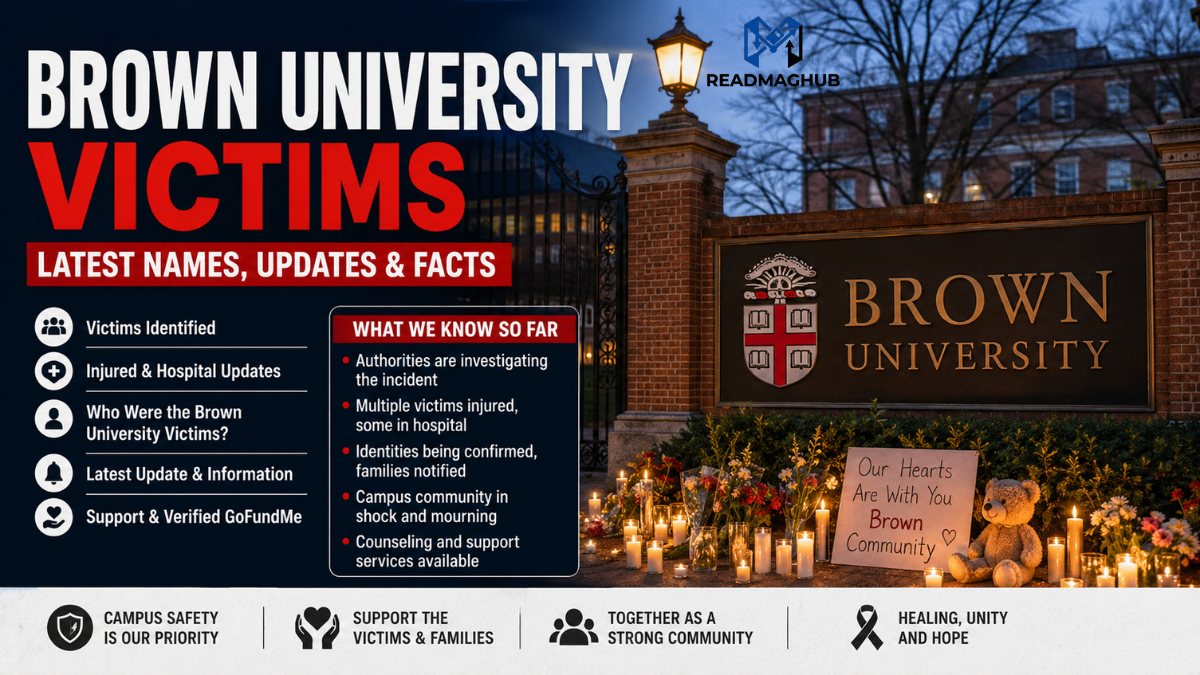

The search for accurate information about the brown university victims has become one of the biggest concerns for students, parents, alumni, and the wider public following reports connected to the recent incident near campus. In situations like this, misinformation spreads fast. People often see conflicting social posts, unverified victim lists, and emotional rumors before official details are confirmed.
That’s why many readers are specifically searching for the names of brown university victims, updates on injuries, hospital conditions, and verified information about those affected. Questions about whether victims were identified, how many people were injured, and whether fundraising campaigns are legitimate are also circulating heavily online.
This article breaks down the latest verified information surrounding the brown university victims shooting, explains what authorities and university officials have confirmed so far, and highlights how victim identification usually works during active investigations. It also looks at the emotional and practical impact these incidents have on campuses—something many news reports overlook.
Most importantly, this guide focuses on clarity, accuracy, and compassion rather than speculation, helping readers understand what is known, what remains unconfirmed, and how these situations typically unfold in real life.
What Happened in the Brown University Incident?
Reports surrounding the incident connected to Brown University triggered immediate concern across campus communities and social media. Emergency alerts, lockdown discussions, and online eyewitness claims quickly spread, leading many people to search for information about the shooting at brown university victims and possible casualties.
In fast-moving situations, early details are often incomplete. Universities and law enforcement agencies usually avoid releasing names until families are notified and medical information is confirmed. This delay can frustrate the public, but it is a critical step that protects victims and prevents misinformation.
One important insight often missed in media coverage is that universities now coordinate with multiple agencies before confirming victim identities. Campus police, local hospitals, and family liaison teams typically work together to verify details before any official statement is released.
This process explains why online rumors about the list of brown university victims may appear hours before authorities confirm anything publicly.
Brown University Victims Identified: What Has Been Confirmed?
One of the most searched questions right now is whether the brown university victims identified reports are accurate.
At the time of writing, authorities have been cautious about releasing complete public information. In many campus emergencies, officials confirm:
- Number of injured individuals
- Whether victims are students, staff, or visitors
- Hospital conditions
- Age ranges
- Family notification status
Only after these steps are completed are full identities typically released.
This careful process matters because early reports can contain major errors. In past university incidents across the United States, innocent individuals were mistakenly named online before official verification. That mistake can create emotional trauma for families and communities.
Another overlooked reality is that universities increasingly monitor social media misinformation during emergencies. False victim names and fake fundraising campaigns are now common enough that schools often issue warnings advising students not to share unverified posts.
Who Were the Brown University Victims?
People asking who were the brown university victims are usually trying to understand the human side of the tragedy rather than just statistics.
In campus-related emergencies, victims can include:
- Undergraduate students
- Graduate students
- Faculty members
- Campus visitors
- Nearby residents
- Event attendees
Authorities generally avoid releasing personal background information immediately unless families approve it.
In many modern university incidents, counseling teams are deployed within hours—not just for direct victims, but also for classmates, roommates, and witnesses. Mental health experts note that students who were not physically injured can still experience severe anxiety after hearing lockdown alerts or witnessing emergency responses.
This broader psychological impact is rarely discussed in standard news coverage but often becomes one of the longest-lasting effects on campus communities.
Brown University Victims Ella Cook: Why the Name Is Trending
Searches for brown university victims ella cook have increased significantly online. In situations like this, names often trend on social media before official confirmation.
It’s important to understand that:
- A trending name does not automatically mean confirmed involvement
- Social media posts may contain incorrect information
- Family members may request privacy
- Authorities may withhold identities temporarily
Responsible reporting requires waiting for verified statements from law enforcement or university officials before drawing conclusions about any individual connected to the incident.
One practical tip for readers is to rely on official university alerts and verified local reporting rather than reposted screenshots or anonymous accounts. During emergencies, false identifications spread faster than corrections.
How Many Brown University Victims Were There?
Another major search query is how many brown university victims were involved.
The answer depends on how authorities classify victims. In campus incidents, officials may separate people into categories such as:
Injured Victims
Individuals physically harmed during the event.
Hospitalized Victims
Those transported for medical evaluation, including precautionary treatment.
Psychological Trauma Cases
Students or witnesses receiving emergency counseling support.
Indirect Victims
Roommates, classmates, or family members affected emotionally.
This broader definition is increasingly important because universities now recognize trauma beyond physical injuries alone.
Brown University Victims Injured: Medical Updates Explained
Search interest around brown university victims injured and brown university victims in hospital reflects concern about recovery conditions.
Hospitals responding to university emergencies usually prioritize:
- Stabilization
- Emergency surgery if needed
- Trauma evaluation
- Family communication
- Mental health support
One unique insight many readers do not realize is that hospitals connected to university incidents often activate “family reunification protocols.” These systems are designed to help parents quickly locate students during chaotic situations.
Medical updates are also intentionally limited in early stages because federal privacy laws restrict hospitals from sharing detailed patient information publicly.
That’s why phrases like:
- Stable condition
- Critical but stable
- Under observation
- Receiving treatment
are commonly used in official updates.
Brown University Victims Ages and Student Demographics
Searches for brown university victims ages usually emerge because people want to know whether undergraduate students were affected.
Universities generally avoid releasing exact ages immediately unless victims are publicly identified. However, campus-related emergencies often involve individuals between:
- 18–24 years old for undergraduate students
- Mid-20s to 30s for graduate students
- Older adults for faculty or staff
An important perspective often ignored is how age affects trauma recovery. Younger students experiencing their first major emergency event may struggle with long-term academic concentration, sleep disruption, or fear of returning to public campus spaces.
Counselors increasingly describe campus emergencies as “community-wide trauma events” rather than isolated incidents.
Brown University Victims Jewish: Why Identity Discussions Matter
Online searches involving brown university victims jewish suggest that some people are trying to determine whether religious identity played a role in the incident.
Authorities typically investigate possible motivations carefully before confirming:
- Hate crime connections
- Ideological targeting
- Bias-related intent
- Personal disputes
- Random violence
Speculation before official findings can create additional fear and tension within communities. Universities often work with religious and cultural organizations during these periods to ensure student safety and prevent misinformation.
A lesser-known reality is that campus administrators frequently increase security around religious centers—even when no confirmed targeting exists—because online rumors alone can raise legitimate safety concerns among students.
Brown University Victims GoFundMe: How to Avoid Fake Fundraisers
Interest in brown university victims gofundme campaigns often rises rapidly after public tragedies.
Unfortunately, scams are common after high-profile emergencies. Fake fundraising pages sometimes appear within hours of breaking news.
Before donating, experts recommend checking whether:
- The campaign is shared by verified family members
- The university acknowledges the fundraiser
- Local news organizations confirm legitimacy
- Donation details are transparent
- Organizer identities are publicly visible
One practical insight: legitimate victim support campaigns are often connected to official student organizations, alumni networks, or recognized nonprofits rather than newly created anonymous accounts.
Brown University Victims Update: What Usually Happens Next?
People searching for a brown university victims update or update on brown university victims are often looking for the next phase after initial emergency reporting.
Typically, developments unfold in stages:
First 24 Hours
- Emergency response
- Lockdowns
- Medical treatment
- Initial police briefing
Days 2–7
- Victim identifications
- Counseling services
- Vigils and memorials
- Security reviews
Following Weeks
- Investigation findings
- Motive discussions
- Campus policy debates
- Long-term recovery support
One often-overlooked aspect is how universities quietly expand mental health staffing after traumatic incidents. Many schools bring in temporary counselors from outside organizations because existing campus services can become overwhelmed.
Brown University Victims Named: Why Confirmation Takes Time
Searches for brown university victims named continue because the public naturally wants concrete answers.
However, naming victims publicly involves several sensitive steps:
- Confirming identities accurately
- Informing immediate family
- Respecting privacy requests
- Coordinating with hospitals
- Avoiding misinformation
In many past university emergencies, officials delayed public release specifically because incorrect early reports caused unnecessary panic.
This slower approach may feel frustrating online, but it is designed to protect victims and families during extremely stressful moments.
The Long-Term Impact on Students and Campus Communities
One of the most important realities rarely discussed after incidents involving shooting brown university victims is the lasting emotional impact.
Students often experience:
- Difficulty concentrating
- Anxiety in crowded spaces
- Fear during emergency alerts
- Sleep problems
- Academic disruption
Professors and administrators may also struggle emotionally while trying to maintain normal campus operations.
Research from previous campus emergencies shows that emotional recovery often lasts far longer than media attention. Some students continue experiencing stress reactions months after returning to classes.
Universities increasingly respond by:
- Offering flexible attendance policies
- Expanding counseling services
- Creating memorial spaces
- Hosting community discussions
- Improving emergency communication systems
FAQ
Who were the Brown University victims?
Authorities have been carefully verifying identities before releasing official information publicly. Victims in campus-related incidents can include students, staff, visitors, or nearby community members. Officials usually notify families before making names public.
Were the Brown University victims identified?
Some details may have been confirmed through official channels, but authorities typically release victim identities gradually. This process helps prevent misinformation and protects families during active investigations.
How many Brown University victims were injured?
The number of injured individuals depends on official classifications and ongoing medical evaluations. Early reports in emergency situations can change as investigations continue and hospitals provide updated information.
Are Brown University victims still in hospital?
Some victims may remain hospitalized depending on injury severity and treatment needs. Hospitals often limit detailed public updates because of medical privacy laws and ongoing investigations.
Is there a verified Brown University victims GoFundMe?
People should verify fundraising campaigns carefully before donating. The safest approach is to look for campaigns shared by official university sources, recognized organizations, or confirmed family representatives.
Why are people searching for Brown University victims Ella Cook?
Names often trend online during major incidents, but social media discussions are not always accurate. Readers should wait for verified announcements from authorities or official university statements before assuming involvement.
Conclusion
The public interest surrounding the brown university victims reflects both concern and confusion during a difficult situation. People naturally want answers about who was affected, how victims are recovering, and whether information circulating online is accurate.
In moments like these, verified reporting matters more than speed. Victim identification, hospital updates, and investigation details often take time because authorities must prioritize accuracy, family notification, and privacy.
Beyond the headlines, campus incidents leave lasting emotional effects on students, faculty, and families. Recovery involves far more than emergency response—it includes mental health support, community healing, and rebuilding a sense of safety.
As new information emerges, focusing on confirmed updates rather than speculation helps protect both victims and the wider community.