

If you’ve ever ordered breakfast at a diner and wondered what exactly Over Medium Eggs means, you’re not alone. Many people know “fried eggs” come in different styles, but the difference between over easy, over medium, and over hard can still feel confusing—especially when you’re trying to get that perfect yolk consistency at home.
Over Medium Eggs sit right in the middle: not too runny, not fully firm. The yolk is partially set, creamy in the center, and the whites are fully cooked. It’s the style many people prefer when they want a little richness without the mess of a fully runny yolk.
In this guide, you’ll learn exactly what over medium eggs are, how they compare to other styles, how long to cook them, and whether they’re safe for pregnancy. We’ll also cover real cooking tips, common mistakes, and even a few insights that most guides skip—so you can confidently make them at home or order them like a pro.
What Are Over Medium Eggs?
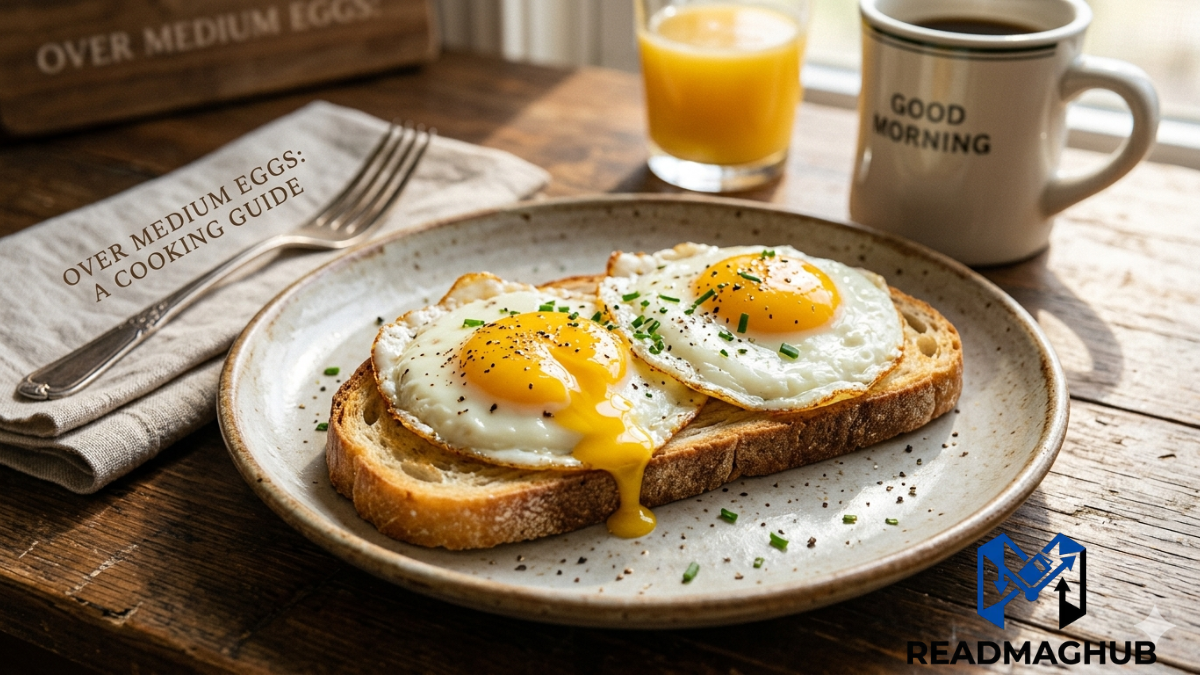
What are over medium eggs? They are fried eggs that are flipped during cooking, with the yolk cooked to a semi-set, creamy consistency.
Here’s the simple breakdown:
- Whites: fully cooked and firm
- Yolk: partially cooked, thickened but still slightly soft in the center
- Texture: creamy, not runny, not hard
This style sits between over easy and over hard, offering a balanced texture that works well for toast, sandwiches, or breakfast plates.
What does over medium eggs mean in practice?
When a cook says “over medium,” they are referring to the yolk’s doneness after flipping the egg. It means the egg is cooked just long enough so the yolk starts to thicken but doesn’t completely solidify.
Over Easy vs Over Medium Eggs
This is one of the most common points of confusion.
Over easy eggs:
- Yolks are fully runny
- Very soft texture
- Cooked briefly after flipping
Over medium eggs:
- Yolks are partially set
- Slight creaminess in the center
- Slightly longer cooking time after flipping
Key difference:
The main difference is yolk firmness. Over easy is liquid; over medium is creamy and thickened.
If you’ve ever had yolk spill everywhere when cutting into your egg, you likely had over easy—not over medium.
How Long to Cook Over Medium Eggs
Timing is everything.
Typical cooking method:
- Heat pan on medium-low
- Cook first side: 2–3 minutes
- Flip carefully
- Cook second side: 1.5–2.5 minutes
Total cooking time:
Around 4–5 minutes
But here’s a real-world insight most guides don’t mention:
The egg continues cooking even after you remove it from the pan due to residual heat. If you want perfect over medium texture, remove it 10–15 seconds earlier than you think.
This small timing adjustment prevents the yolk from becoming too firm.
What’s Over Medium Eggs vs Other Styles
Let’s compare all fried egg styles clearly:
Over easy:
- Very runny yolk
- Minimal flipping time
Over medium:
- Creamy, partially set yolk
- Balanced texture
Over hard:
- Fully cooked yolk
- No liquid center
Sunny side up:
- Not flipped
- Runny yolk, soft whites on top
Over medium is often considered the “safe middle ground” for people who don’t want raw yolk but still enjoy richness.
2 Over Medium Eggs Calories
Calories depend on cooking fat and egg size.
Average breakdown:
- 1 large egg: ~70–80 calories
- 2 over medium eggs: 140–160 calories
- With oil or butter: add 20–50 calories
So, 2 over medium eggs calories typically range between:
160–210 calories total
This makes them a high-protein, relatively low-calorie breakfast option.
Can You Eat Over Medium Eggs While Pregnant?
This is an important safety question.
Short answer:
It depends on how well the yolk is cooked.
Over medium eggs while pregnant:
- Yolk is partially cooked
- Slight risk if eggs are not pasteurized or fully heated
Can pregnant women eat over medium eggs?
Most health guidelines recommend:
- Fully cooked eggs (like over hard or fully set yolks)
- Or pasteurized eggs if yolk is soft
Can you eat over medium eggs while pregnant safely?
Yes, but only if:
- Eggs are pasteurized
- Yolk is cooked more toward firm than runny
- Proper hygiene and storage are maintained
Practical advice:
If you’re unsure, choose over hard eggs during pregnancy to eliminate risk entirely.
What Does Over Medium Eggs Mean in Spanish?
If you’re ordering in Spanish-speaking countries, you might hear:
- “Huevos fritos a término medio”
- “Huevos volteados medianos”
In practice, restaurants may simply understand:
“yema semi cocida”
So even if terminology varies, the concept remains the same: a yolk that is partially set but still soft.
How to Cook Perfect Over Medium Eggs (Step-by-Step)
Step 1: Use fresh eggs
Fresh eggs hold shape better when flipped.
Step 2: Heat pan properly
Medium-low heat is ideal. Too hot = rubbery whites.
Step 3: Add fat
Butter or oil prevents sticking.
Step 4: Cook first side
Wait until whites are mostly set.
Step 5: Flip gently
Use a thin spatula to avoid breaking yolk.
Step 6: Cook second side
1.5–2.5 minutes depending on yolk preference.
Step 7: Rest briefly
Letting eggs sit for 10–15 seconds improves texture.
Common Mistakes When Making Over Medium Eggs
1. Using high heat
This causes crispy edges and uneven yolk cooking.
2. Flipping too early
White must be mostly set before flipping.
3. Overcooking after flip
This turns over medium into over hard quickly.
4. Ignoring carryover cooking
Eggs keep cooking off heat—important for perfect texture.
Unique Cooking Insights Most People Miss
Here are a few lesser-known but practical insights:
1. Pan temperature matters more than timing
A slightly cooler pan creates more control over yolk doneness than simply adjusting minutes.
2. Covering the pan briefly changes everything
Covering for 20–30 seconds after flipping gently steams the top, helping whites set without overcooking the yolk.
3. Egg age affects results
Older eggs spread more and are harder to flip cleanly, making over medium consistency less reliable. Fresh eggs give tighter, neater results.
2 Over Medium Eggs in Real Meals
Over medium eggs are versatile and commonly used in:
- Breakfast sandwiches
- Rice bowls
- Toast with avocado
- Breakfast platters
- Burgers
Their creamy yolk adds richness without being overly messy like over easy eggs.
Over Medium Eggs vs Over Easy (Quick Decision Guide)
Choose over easy if you want:
- Runny yolk for dipping
- Very soft texture
Choose over medium if you want:
- Less mess
- Creamy yolk
- More control in dishes
FAQ
1. What is over medium eggs exactly?
Over medium eggs are fried eggs with fully cooked whites and a yolk that is partially set but still soft and creamy in the center. They are flipped during cooking and cooked slightly longer than over easy eggs.
2. Can I eat over medium eggs while pregnant?
Yes, but caution is advised. If the yolk is not fully firm or eggs are not pasteurized, there may be a small risk. Many doctors recommend fully cooked yolks during pregnancy for safety.
3. How long do you cook over medium eggs?
Typically 4–5 minutes total. The second side is cooked for about 1.5–2.5 minutes, depending on how firm you want the yolk.
4. What’s the difference between over easy and over medium eggs?
Over easy eggs have runny yolks, while over medium eggs have partially set, creamy yolks. The difference is mainly in how long the second side is cooked.
5. How many calories are in 2 over medium eggs?
Two over medium eggs contain about 140–160 calories without added oil or butter. With cooking fat, it can rise slightly to around 200 calories.
6. What does over medium eggs mean in Spanish?
They are often described as “huevos fritos a término medio” or “yema semi cocida,” meaning the yolk is partially cooked but still soft.
Conclusion
Over Medium Eggs are the perfect middle ground for anyone who wants a creamy yolk without the mess of a fully runny egg. They’re simple, versatile, and easy to master once you understand timing and heat control.
Whether you’re comparing over easy vs over medium eggs, wondering about safety during pregnancy, or just trying to improve your breakfast skills, the key is balance—slight firmness, gentle heat, and careful timing.
Once you get them right, they quickly become a go-to breakfast style that works with almost anything on your plate.